
Delivery
Dedicated development team cost: what shapes your budget
Dedicated development team cost follows the roster, seniority mix, location, and contract terms. Use the current planning ranges below to compare squad shapes, then check what each monthly quote includes before you commit.
By Umar HayatChief Technology Officer, Algo Vortex
Updated
Key takeaways
Think monthly, not total
A dedicated team is a recurring cost for a roster. If you are thinking in project totals, you probably want a scoped build instead.
Squad shape drives the number
Three engineers with a shared lead and part-time QA is a different bill from five engineers with dedicated design and QA.
Blended rate hides useful detail
Ask for the per-role rate. A blended number can hide a squad that is mostly junior with one senior name on the proposal.
Notice period matters more than rate
A ten percent better rate on a ninety-day notice is worse than a slightly higher rate you can exit in thirty.
How much does a dedicated development team cost in 2026?
Dedicated development teams are usually priced per person each month, so total cost follows team size, role mix, seniority, and location. The ranges below are existing planning figures for South Asian delivery, including Pakistan. Confirm every quote directly because contract terms and included services can change the effective monthly cost.
A starter squad of two engineers with a part-time lead and part-time QA commonly runs $12,000 to $20,000 a month. A standard product squad, meaning a lead, three engineers, and a QA engineer, typically lands $25,000 to $40,000. A full product team with dedicated design and a delivery lead on top usually sits $40,000 to $65,000.
The spread inside each band comes almost entirely from seniority mix and specialisation. A squad built around senior engineers with AI or infrastructure depth sits at the top. A squad of capable mid-level generalists sits at the bottom, and for a lot of well-understood work that is the correct choice rather than a compromise.
Compare against the alternative honestly. A standard product squad in a US metro, fully loaded with benefits, recruiting, and payroll tax, is commonly three to four times these figures. Offshore vs in-house development runs that comparison properly, including the costs that never make it onto the spreadsheet.
Typical monthly dedicated team cost, 2026, USD, South Asia delivery
Squad shape
Starter squad
Roster
2 engineers, part-time lead, part-time QA
Typical monthly
$12,000 to $20,000
Squad shape
Standard product squad
Roster
1 lead, 3 engineers, 1 QA
Typical monthly
$25,000 to $40,000
Squad shape
Full product team
Roster
1 lead, 4 engineers, 1 QA, 1 designer, delivery lead
Typical monthly
$40,000 to $65,000
Squad shape
Platform or AI squad
Roster
Senior-weighted, 4 to 5 people
Typical monthly
$45,000 to $80,000
| Squad shape | Roster | Typical monthly |
|---|---|---|
| Starter squad | 2 engineers, part-time lead, part-time QA | $12,000 to $20,000 |
| Standard product squad | 1 lead, 3 engineers, 1 QA | $25,000 to $40,000 |
| Full product team | 1 lead, 4 engineers, 1 QA, 1 designer, delivery lead | $40,000 to $65,000 |
| Platform or AI squad | Senior-weighted, 4 to 5 people | $45,000 to $80,000 |
How much does each dedicated team role cost?
Ask vendors for per-role monthly rates and named seniority levels. A single blended figure can hide a junior-heavy roster or shared specialists who appear dedicated in the proposal. Two teams with the same headline price may offer very different ownership, review capacity, and ability to handle difficult technical decisions.
As monthly ranges for a Pakistan delivery centre in 2026: a mid-level engineer commonly runs $3,500 to $5,500, a senior engineer $5,500 to $8,000, a tech lead $7,000 to $10,000, a QA engineer $2,500 to $4,500, a product designer $3,500 to $6,000, and a DevOps or platform engineer $5,000 to $8,500. Specialised AI or machine learning engineers sit above the senior band, commonly $7,000 to $11,000.
These are all-in monthly costs to you, not the engineer's salary. The gap between the two covers employment cost, equipment, office, recruiting, bench risk, and margin. A partner quoting close to local salary is either running an unsustainable margin or is not actually employing the people.
For hourly equivalents and the rate discussion specifically, offshore development rates in Pakistan goes into more detail.
Per-role monthly cost, 2026, USD, Pakistan delivery centre
Role
Mid-level engineer
Typical monthly
$3,500 to $5,500
Notes
The bulk of most squads
Role
Senior engineer
Typical monthly
$5,500 to $8,000
Notes
Owns a domain, reviews others
Role
Tech lead
Typical monthly
$7,000 to $10,000
Notes
Architecture and technical direction
Role
QA engineer
Typical monthly
$2,500 to $4,500
Notes
Often part-time on small squads
Role
Product designer
Typical monthly
$3,500 to $6,000
Notes
Front-loaded on new products
Role
DevOps or platform
Typical monthly
$5,000 to $8,500
Notes
Frequently shared across squads
Role
AI or ML engineer
Typical monthly
$7,000 to $11,000
Notes
Above the senior band
| Role | Typical monthly | Notes |
|---|---|---|
| Mid-level engineer | $3,500 to $5,500 | The bulk of most squads |
| Senior engineer | $5,500 to $8,000 | Owns a domain, reviews others |
| Tech lead | $7,000 to $10,000 | Architecture and technical direction |
| QA engineer | $2,500 to $4,500 | Often part-time on small squads |
| Product designer | $3,500 to $6,000 | Front-loaded on new products |
| DevOps or platform | $5,000 to $8,500 | Frequently shared across squads |
| AI or ML engineer | $7,000 to $11,000 | Above the senior band |
What should dedicated team pricing include?
Dedicated team pricing should state whether employment costs, equipment, connectivity, standard software, partner management, recruiting, replacement cover, and paid leave are included. Ask for an itemized answer before comparing quotes. A lower monthly rate can cost more if essential support, specialist tools, or replacement ramp time is billed separately.
That last one is worth asking about directly. Whether a rate is quoted against a full month regardless of leave, or pro-rated, changes the effective cost by several percent. Neither approach is wrong, but comparing one against the other without noticing is how a quote wins on paper and loses in practice.
Things that are usually not included: your own cloud and third-party costs, specialised tooling licences for your stack, travel if you want anyone on site, and any equipment beyond a standard developer laptop. None of these should be a surprise if you ask.
Also ask what happens during a ramp. Some partners bill full rate from day one, others discount the first few weeks while the engineer learns your system. Both are defensible and it is worth a percent or two of the annual number.
Which contract terms affect dedicated team cost?
Notice periods, replacement terms, roster changes, and leave billing can affect total cost more than a small rate difference. Read what happens when someone leaves, performance falls short, or your roadmap changes. A flexible agreement can protect the budget when the first team shape turns out to be wrong.
Replacement terms next. If an engineer leaves or is not working out, how fast is a replacement in place, and who pays for the ramp on the new person. A partner who absorbs replacement ramp is quietly offering a real discount. A partner who bills it is passing you the cost of their own attrition.
Then the ability to change the roster. Can you add a person mid-quarter, and how quickly. Can you drop one, and with what notice. A dedicated team that cannot flex is a fixed cost pretending to be a variable one.
Finally, the standard terms that are not about money but decide whether the arrangement is safe: IP assignment on payment, your repositories and cloud accounts from day one, named people in the statement of work, and a handover deliverable on exit. How to choose a software development company covers the wider diligence.
When is a dedicated development team the wrong model?
A dedicated team is the wrong model when the roadmap cannot keep a stable squad busy, the engagement is short, or no one inside your company owns priorities. A scoped project or targeted staff augmentation may fit better when work has a clear finish or you need only one specialist.
When the engagement is short. Under about six months the ramp cost dominates and you never reach the point where continuity pays for itself. Augmentation or a fixed-scope build fits better. Staff augmentation vs outsourcing covers the distinction.
When nobody on your side will own it. A dedicated team needs a product owner who sets priorities and a technical counterpart who answers questions. Without those you are paying five people to guess, which is the most expensive form of engineering there is.
When what you actually need is one specialist. Buying a squad to get access to one skill is an expensive way to hire one person.
Plan your team
Get a roster built around your roadmap
Share the work ahead, skills you need, and expected duration. We will suggest a team shape with per-role pricing and tell you if a scoped project would be a better fit.
Talk to Algo VortexRelated in this cluster
- Offshore development rates in PakistanPakistan software development rates vary by seniority, role, provider type, and engagement length. Use these 2026 planning ranges to screen proposals, then compare the team, delivery process, and contract behind each number.
- Offshore vs in-house developmentChoosing between offshore and in-house development is not a salary-versus-rate exercise. Compare hiring time, management load, knowledge ownership, team continuity, and the cost of a delayed roadmap before deciding where each stream of work belongs.
- Staff augmentation vs outsourcingStaff augmentation adds specialists to a team you manage. Outsourcing gives a defined outcome to a vendor that manages delivery. Choose based on who can own the backlog, technical decisions, and day-to-day work, not on which label sounds more flexible.
- Custom software development costCustom software cost follows scope, integrations, data, and the team needed to keep it running. A useful estimate separates the first production release from hosting, maintenance, and later changes. This guide explains the cost drivers already hiding inside most briefs.
Related capabilities
Related case studies
Live products where this kind of work showed up in the build.
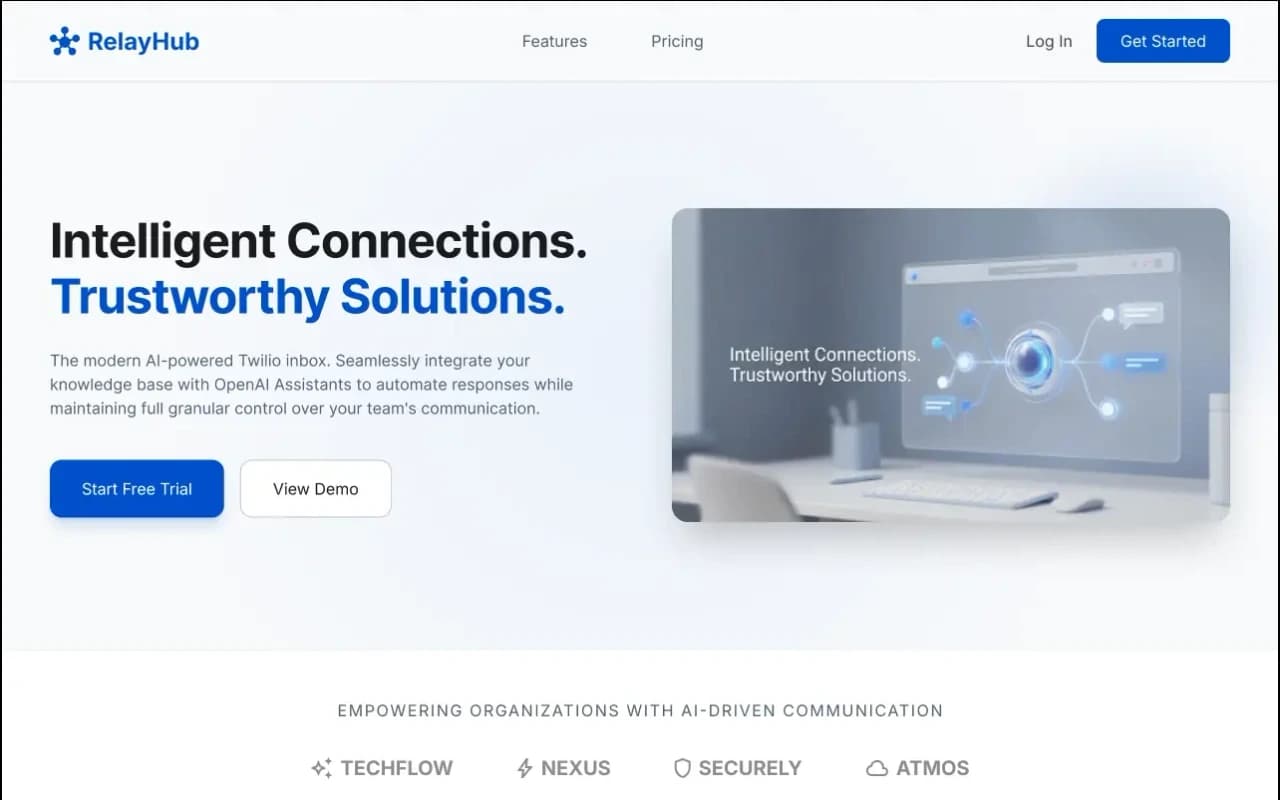
RelayHub AI communication portal case study
Twilio + OpenAI shared inbox
One triage view for Twilio phone and digital threads, with OpenAI drafts under admin prompts. Built for teams tired of rebuilding context across tools.

RouteMind AI fleet dispatch case study
AI Fleet Advisor + live load board
Shipper load board and fleet dashboard on one ops model, with an AI advisor that reads live capacity before suggesting the next move.
Questions
More on all insights, AI development, or contact Algo Vortex.