
Custom Software Development
Custom software development for web, mobile, and SaaS
Build software around your workflows instead of forcing your team into a generic tool. We take web, mobile, and SaaS products from discovery to production with clear ownership and maintainable code.
How an engagement usually runs
Step 1
Discover and decide
Workshops, stakeholder interviews, and a written plan covering scope, risks, architecture options, and a first release you can ship.
Step 2
Build the foundation
Repos, auth, environments, and the first vertical features land so every later sprint plugs into a stable base.
Step 3
Iterate toward launch
Milestone demos, QA, and hardening. You approve what ships, and the backlog stays honest about what waits.
Step 4
Stabilize and transfer
Production support window, docs, and optional retainers so your team or ours can keep improving without a restart.
When does custom software beat off-the-shelf tools?
Custom software development creates an application around your workflows, users, and growth plans. It fits when packaged tools create costly workarounds or cannot support a product advantage. Common builds include multi-tenant SaaS platforms, internal operations systems, marketplaces, customer portals, and integrations that connect several vendors.
People usually arrive when the spreadsheet era is over, when a first version needs a rebuild that can grow, or when the in-house team needs a partner who can own a full vertical without constant hand-holding. SaaS founders often need tenant isolation, subscription billing, admin consoles, and customer-facing dashboards that share one design system. Operations leaders often need portals, integrations, and audit trails that survive real staff turnover.
Poor fit for pure body shopping with no product context, or for one-week brochure sites. Strong fit when you care about maintainability, release cadence, and business outcomes tied to the roadmap. If the problem is clear and you need people who write code you can keep, this is the engagement.
What does a custom software engagement include?
Engagements cover greenfield products, major modules inside an existing codebase, and rewrites that move you off brittle stacks without a big-bang cutover. Domains we ship often include billing and subscriptions, role-based admin, inventory and logistics, content and assessment, customer-facing portals, and B2B SaaS with multi-tenant auth.
Deliverables are working software in your repos: APIs, web apps, background jobs, admin tools, and the migrations and docs that let your team continue after we leave. Handoff is not a zip file of mysteries. For SaaS specifically, planning covers tenant boundaries, feature flags, usage metering hooks, and support tooling so your team can operate the product after launch day.
The glue that makes products real comes too: payment providers, email and notification systems, file storage, search, and third-party APIs. RelayHub-style platforms and Loom & Luxe-style commerce flows both started as custom builds with clear module boundaries, not as endless prototypes.
How do you deliver custom software?
Discovery workshops pin down users, constraints, and a release plan. Architecture choices follow the problem, not our favorite framework of the month. Then milestones you can demo to stakeholders. A named lead, a shared backlog, and regular demos in your staging environment are the default rhythm.
Risks show up early: unclear requirements, third-party limits, data migration surprises, or a compliance review that was never scheduled. Better to argue about trade-offs in week two than explain a missed launch in week twelve. Fixed-scope builds work when the brief is clear. Dedicated teams and offshore development center setups work when the roadmap keeps shifting and you need the same people week after week. Question-led guides on custom software development, custom CRM, and SaaS development sit next to this page.
What stack do you use for custom software?
TypeScript, React, Next.js, Node, Python, .NET, Rails, and Postgres show up often because they match many product needs. Meeting you on your stack is fine when that is the sane path. Docker, CI, and cloud hosting on AWS (or Azure or GCP when that is your home) are part of how shipping works, not an afterthought.
Code review, automated tests where they protect critical paths, staging environments, and readable migrations are default. Code gets written for the next engineer who will touch the file, including your own hires. Branching, release notes, and observability land before go-live so production is not a mystery box.
How do you build SaaS products?
Multi-tenant SaaS is a common shape for custom software work. Tenant isolation, subscription billing, role-based admin, feature flags, and support tooling have to ship as product features, not as a week of glue before launch. Shared design systems keep customer and admin surfaces coherent.
Planning covers entitlements, usage metering hooks, and environments where you can demo a feature to one customer before opening it to everyone. RelayHub-style inboxes and other B2B tools follow that pattern: one codebase, clear tenant boundaries, and ops dashboards your team can run after we leave.
Which industries use custom software here?
Fintech, healthcare, e-commerce, SaaS, logistics, and edtech are frequent homes for our custom builds. Patterns repeat across domains. Domain rules, audit needs, and integration catalogs get respected instead of flattened into a generic template.
Related case studies: RelayHub, Loom & Luxe.
Why hire Algo Vortex for custom software?
Clients stay because custom software gets treated as a product partnership. Conversations cover both the ticket and the business reason behind it. Status is honest: risks, dates, and trade-offs early, not a surprise near the end. Engagement models include dedicated team, staff augmentation, fixed price, and a full offshore development center when you want a lasting unit.
Based in Lahore, Algo Vortex serves product and engineering leaders across the US, UK, UAE, and beyond. Your IP stays yours under the development agreement. NDAs are standard before proprietary workflows get shared. Review RelayHub, compare the custom software guide, or contact us with your current system, desired outcome, and hard dates.
Technologies we use
Common industries: Fintech, Healthcare, E-commerce, SaaS, Logistics, EdTech, Banking.
Related case studies
Live products where this capability showed up in the build.
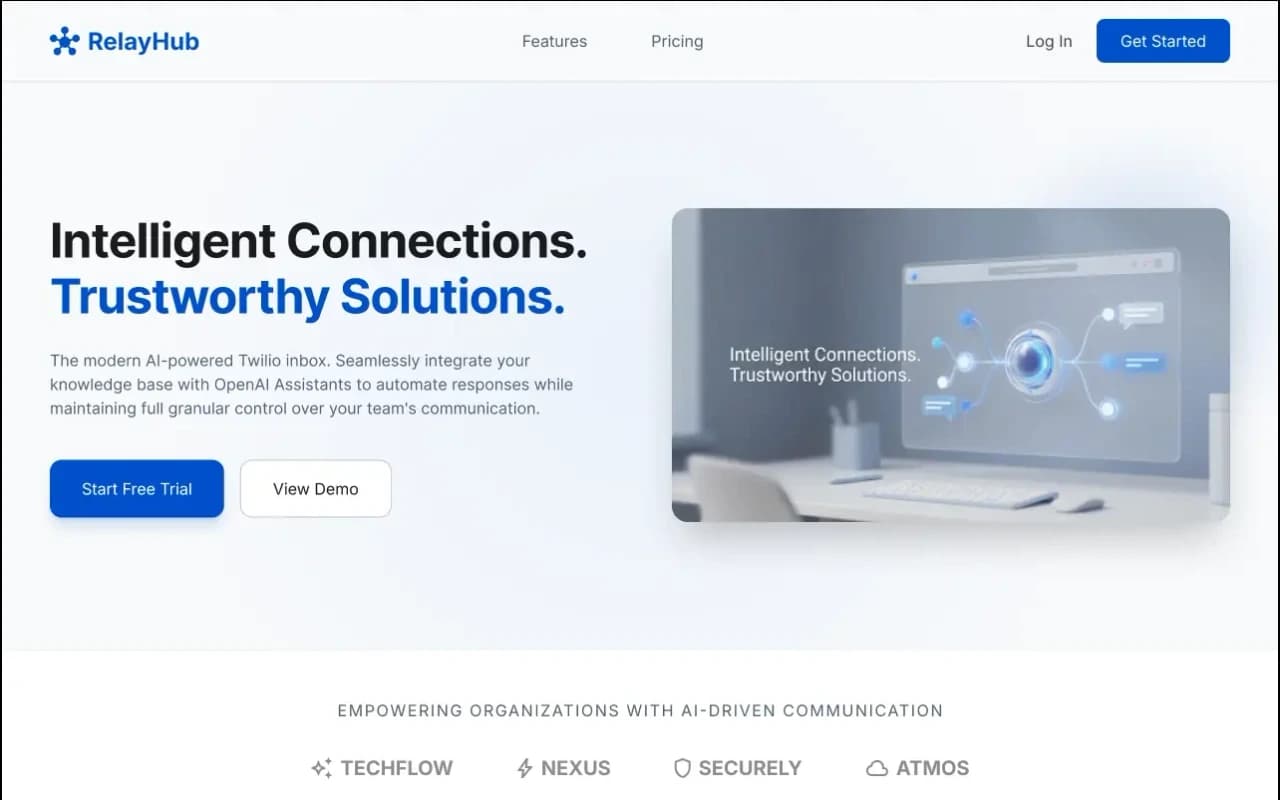
RelayHub AI communication portal case study
Twilio + OpenAI shared inbox
One triage view for Twilio phone and digital threads, with OpenAI drafts under admin prompts. Built for teams tired of rebuilding context across tools.

Loom & Luxe dress rental marketplace case study
Rentals, deposits, and return logistics
Editorial catalog with Stripe holds and automated return pickup. Lender dashboard keeps inventory and earnings honest for both sides.
Related capabilities
- Web & Mobile DevelopmentReact, Next.js, Flutter, or React Native apps fast enough for daily use and solid enough to grow.
- AI & Data InnovationGenerative AI, ML, and data pipelines that land in products people use, not pilots that die on a slide deck.
- QA & SecurityAutomated tests, performance checks, and security-minded QA so fewer surprises show up late.
Questions about this service
More engagement and IP questions live on the FAQ page. For a lasting dedicated unit, read the Offshore Development Center guide. Ready to talk? Contact Algo Vortex.