
Software
Custom Software Development: When to Build and What to Expect
Custom software earns its keep when your workflow does not fit a vendor tool, or when that workflow is the product customers buy. Here is how to decide, what a serious engagement includes, and how to ship something your team can still run after launch.
By Umar HayatChief Technology Officer, Algo Vortex
Updated
Key takeaways
Build around a costly workflow
Custom software makes sense when a vendor's model forces recurring manual work or blocks the product you sell. A brochure site does not need it.
A first slice beats a big-bang rewrite
Ship one vertical that users can touch. Then replace modules. A two-year cutover with no demo is how projects die.
SaaS and CRM are shapes, not separate religions
Multi-tenant billing, a CRM-shaped pipeline, a marketplace. Same discipline: auth, data model, ops.
Someone has to keep it
Handoff is docs, tests, and a team that still answers. A zip of mysteries is not delivery.
When does custom software beat off-the-shelf tools?
Custom software development is the right choice when a core workflow cannot fit an existing product without costly workarounds. Common examples include a multi-tenant SaaS product, an internal operations platform, or a marketplace with unusual payment and logistics rules. If standard software covers the job well, buying is usually smarter.
People usually arrive when the spreadsheet era is over, when a first version needs a rebuild that can grow, or when the in-house team needs a partner who can own a full vertical. Poor fit is a one-week brochure, or body shopping with no product context. Strong fit is maintainability, release cadence, and outcomes tied to a roadmap.
If you are still choosing buy versus build, read custom software vs off-the-shelf. If the shape is a pipeline of accounts and deals, read custom CRM development. Cost bands live on custom software development cost.
What does a custom software engagement include?
Engagements cover greenfield products, major modules inside an existing codebase, and rewrites that move you off a brittle stack without a big-bang cutover. Common domains: billing and subscriptions, role-based admin, inventory and logistics, assessments, customer portals, and B2B SaaS with multi-tenant auth.
Deliverables are working software in your repos: APIs, web apps, background jobs, admin tools, and the migrations and docs that let your team continue. The glue that makes products real comes too: payments, email, files, search, third-party APIs. RelayHub and Loom & Luxe both started as custom builds with clear module boundaries.
The commercial path is custom software development. Web and phone clients often sit next to it under web and mobile.
How do you deliver custom software?
Discovery pins users, constraints, and a first release you can demo. Architecture follows the problem, not a favorite framework. Then milestones in your staging environment. A named lead and a shared backlog are the default rhythm.
Risks show up early: unclear requirements, third-party limits, data migration, a compliance review that was never scheduled. Better to argue in week two than explain a missed launch in week twelve. Fixed-scope fits a clear brief. A dedicated team or offshore development center fits a roadmap that keeps shifting.
How to build custom software is the sequence. How to choose a software development company is the buying filter. Algo Vortex delivers from Lahore with US, UK, and Gulf clients. Overlap hours are planned. Async hours move implementation.
How do SaaS and CRM-shaped systems fit?
Multi-tenant SaaS is a common shape. Tenant isolation, subscription billing, entitlements, feature flags, and support tooling have to ship as product features, not as a week of glue. SaaS development covers what an MVP must include.
A CRM-shaped system is custom software with a pipeline, records, permissions, and integrations. It is not automatically a Salesforce replacement. Custom CRM vs Salesforce is the decision. We do not have a Salesforce rip-and-replace case study. Closest shipped work is RelayHub for inbox and accounts, Loom for customer and payments, QuizQuest for roles and assessments.
If the next question is who should build it, send the job and the constraints on contact.
What is custom software not a fit for?
Custom is a poor fit for a brochure that a site builder already covers, for a one-week campaign landing page, or for a request that is really staff hours inside a process you already own. Those jobs have cheaper shapes. A partner who never says no is selling complexity.
It is also a poor fit when nobody can name the user, the done state, or who will operate the system after launch. Discovery can sharpen a fuzzy brief. It cannot invent an owner. If the only artifact is a slide titled transformation, wait.
IP for work you fund transfers under the contract. Code lives in your repos. NDAs come before sensitive systems open. That is the default here, not an upsell. Ask any vendor the same three things before you compare rates.
Next step
Does your core workflow still live in workarounds?
Share the workflow, current stack, and what users need to finish. We will tell you whether to build, replace one slice, or keep the tools you have.
Talk to Algo VortexRelated in this cluster
- Custom software development costCustom software cost follows scope, integrations, data, and the team needed to keep it running. A useful estimate separates the first production release from hosting, maintenance, and later changes. This guide explains the cost drivers already hiding inside most briefs.
- Custom software vs off-the-shelfBuy software when a vendor already handles the job well. Build when the workflow itself sets your business apart or the workaround cost keeps climbing. Many teams need both: a proven product for standard work and a custom layer for the part that is uniquely theirs.
- SaaS developmentSaaS development includes the product people pay for and the rails that keep each customer separate: tenancy, billing, permissions, support tools, and controlled releases. A credible MVP pairs those basics with one workflow that solves a painful job. Everything else can wait.
- Custom CRM developmentCustom CRM development makes sense when your records, pricing, permissions, or fulfillment flow cannot fit a standard CRM without constant manual work. The goal is not to copy Salesforce. It is to build the smallest system that reflects how your team actually sells and serves customers.
- How to build custom softwareStart custom software with one job, known users, and a result you can demonstrate. Model the records behind that job, ship a vertical slice through a real integration, and put it in staging early. Broad platform plans can wait until the first workflow works.
Related capabilities
Related case studies
Live products where this kind of work showed up in the build.
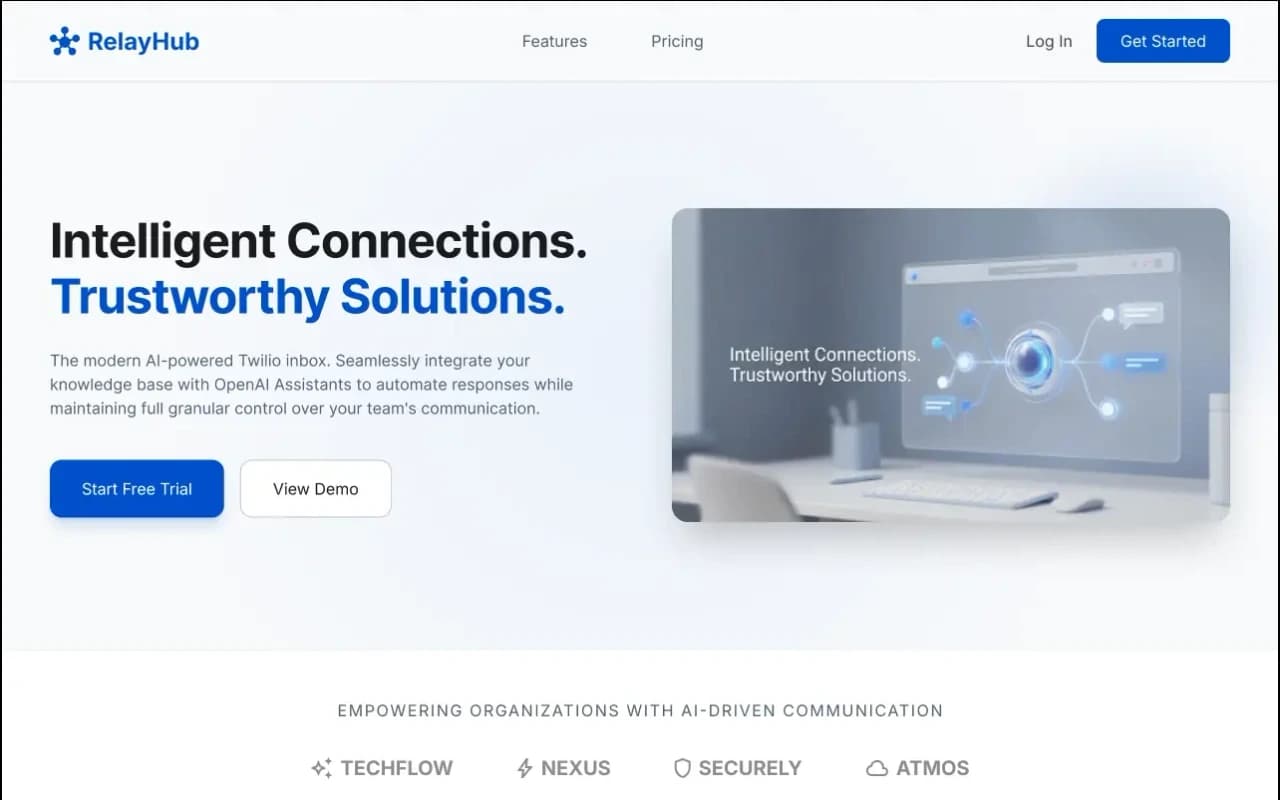
RelayHub AI communication portal case study
Twilio + OpenAI shared inbox
One triage view for Twilio phone and digital threads, with OpenAI drafts under admin prompts. Built for teams tired of rebuilding context across tools.

Loom & Luxe dress rental marketplace case study
Rentals, deposits, and return logistics
Editorial catalog with Stripe holds and automated return pickup. Lender dashboard keeps inventory and earnings honest for both sides.
Questions
More on all insights, custom software, or contact Algo Vortex.