
Delivery
Offshore development rates in Pakistan: 2026 guide
Pakistan software development rates vary by seniority, role, provider type, and engagement length. Use these 2026 planning ranges to screen proposals, then compare the team, delivery process, and contract behind each number.
By Umar HayatChief Technology Officer, Algo Vortex
Updated
Key takeaways
$20 to $45 an hour covers most of it
Mid-level to senior engineering from an established Pakistani firm sits in that band in 2026. Specialists go higher.
The spread is about the seller, not the country
A freelancer, a small studio, and an established firm quote very differently for the same skill. Compare like with like.
Rate is a poor proxy for cost
Total cost follows rework and coordination. A team at half the rate that redoes a quarter of the work is not half the price.
Below $15 buys something else
At that level something is missing: seniority, testing, or the assumption that the person is employed rather than subcontracted.
What are software development rates in Pakistan in 2026?
For 2026 planning, established Pakistani software firms commonly quote within the role-based ranges below. Seniority, specialist demand, engagement length, and provider structure all affect the final rate. Treat these figures as screening ranges, not guaranteed market prices, and confirm what staffing, review, equipment, and management each proposal includes.
Specialised skills carry a premium that is larger than most buyers expect. AI and machine learning engineering commonly runs $45 to $75, and platform or site reliability engineering $35 to $60. The supply of genuinely experienced people in those areas is thin everywhere, and Pakistan is no exception.
Most engagements convert to monthly rather than hourly, which is usually the better basis because it removes the incentive to bill hours rather than deliver outcomes. Dedicated development team cost covers the monthly figures by role and squad shape.
These ranges assume a firm with a legal entity, employed staff, and someone accountable for delivery. Freelance marketplaces run considerably lower and the difference is not a discount, it is a different product with different risk.
Pakistan hourly rates, 2026, USD, established firm
Role
Junior engineer
Hourly range
$18 to $25
Notes
Needs supervision, fine for well-defined work
Role
Mid-level engineer
Hourly range
$22 to $35
Notes
The core of most squads
Role
Senior engineer
Hourly range
$32 to $50
Notes
Owns a domain end to end
Role
Tech lead or architect
Hourly range
$45 to $70
Notes
Architecture and technical direction
Role
QA engineer
Hourly range
$15 to $28
Notes
Manual and automation
Role
Product designer
Hourly range
$22 to $40
Notes
UX and UI
Role
DevOps or SRE
Hourly range
$35 to $60
Notes
Often shared across projects
Role
AI or ML engineer
Hourly range
$45 to $75
Notes
Thin supply, real premium
| Role | Hourly range | Notes |
|---|---|---|
| Junior engineer | $18 to $25 | Needs supervision, fine for well-defined work |
| Mid-level engineer | $22 to $35 | The core of most squads |
| Senior engineer | $32 to $50 | Owns a domain end to end |
| Tech lead or architect | $45 to $70 | Architecture and technical direction |
| QA engineer | $15 to $28 | Manual and automation |
| Product designer | $22 to $40 | UX and UI |
| DevOps or SRE | $35 to $60 | Often shared across projects |
| AI or ML engineer | $45 to $75 | Thin supply, real premium |
Why do Pakistan developer rates vary so much?
Pakistan developer rates vary because job titles do not describe the full service. Provider type, real experience, engagement length, delivery ownership, testing, and replacement cover all affect a quote. Compare a freelancer with another freelancer and an established firm with another firm before treating the difference as a saving.
Who you are buying from is the largest. A freelancer on a marketplace has no employment cost, no office, no bench, and no management overhead, so they can quote at ten to fifteen dollars and still earn well. An established firm carries all of those and has to price them in. What you get for the difference is continuity, replacement cover, a legal counterparty, and someone whose job is to notice when a project is going wrong.
Actual experience is second, and titles inflate. Five years of building similar systems is a different thing from five years of assorted work, and it shows up in architecture decisions rather than in typing speed. Read a code sample and talk to the person rather than trusting the label on the proposal.
Engagement length is third. A long dedicated arrangement usually prices below a short project because the partner is not carrying bench risk between engagements. And engagement type is fourth: fixed price carries a risk premium of roughly fifteen to thirty percent over the same work billed hourly, because somebody has to own the scope risk and in that model it is the vendor.
How do Pakistan software rates compare with other regions?
Pakistan generally sits in the lower-cost group of established offshore engineering markets, while Latin America and Eastern Europe often charge more for workday overlap with US or European buyers. Rate is only one factor. Talent fit, communication, travel, legal terms, and actual shared hours can outweigh a regional difference.
Eastern Europe, meaning Poland, Romania, and Ukraine, runs meaningfully higher, commonly $40 to $80 an hour. The trade is timezone: those markets share a working day with Western Europe and a workable afternoon with the US East Coast. If overlap is your binding constraint rather than budget, that premium is buying something real.
Latin America runs $35 to $70 and exists almost entirely for US timezone alignment. For a US West Coast company the overlap advantage over South Asia is large enough that the rate difference is often justified.
The Philippines sits close to Pakistan on rate and is stronger on customer-facing and support-heavy work. For product engineering specifically, South Asia has the deeper bench.
Where Pakistan does well is the combination of rate, English-language working, and a large enough talent pool for real product engineering. Where it is weakest is US West Coast overlap, which is twelve to thirteen hours and genuinely difficult. The timezone overlap planner gives you the real number for your city.
Rough regional comparison, 2026, mid to senior engineering
Region
Pakistan
Typical hourly
$22 to $50
Main trade-off
US West overlap is hard
Region
India
Typical hourly
$25 to $55
Main trade-off
Similar, larger market
Region
Philippines
Typical hourly
$20 to $45
Main trade-off
Stronger on support than product engineering
Region
Latin America
Typical hourly
$35 to $70
Main trade-off
Best US overlap, higher rate
Region
Eastern Europe
Typical hourly
$40 to $80
Main trade-off
Best EU overlap, highest offshore rate
Region
US or Western Europe
Typical hourly
$100 to $200
Main trade-off
Same room, several times the cost
| Region | Typical hourly | Main trade-off |
|---|---|---|
| Pakistan | $22 to $50 | US West overlap is hard |
| India | $25 to $55 | Similar, larger market |
| Philippines | $20 to $45 | Stronger on support than product engineering |
| Latin America | $35 to $70 | Best US overlap, higher rate |
| Eastern Europe | $40 to $80 | Best EU overlap, highest offshore rate |
| US or Western Europe | $100 to $200 | Same room, several times the cost |
What should you check when a developer rate looks too low?
A very low developer rate is not automatically false, but it usually reflects a different service. Check seniority, employment status, testing, code review, availability, replacement terms, and renewal pricing. Ask who will do the work and meet that person before comparing the quote with a managed team.
Seniority. The rate is real and the person is early-career. That is fine for well-defined work with a strong reviewer, and it is a poor idea for architecture or anything where a bad early decision compounds.
Testing and review. The quote covers writing code and not verifying it. This looks like a saving for one sprint and stops looking like one the first time something breaks in production that a test would have caught.
Employment. The person is a subcontractor rather than an employee, possibly working across several clients simultaneously. You have no continuity guarantee and no real recourse. This is common on marketplaces and it is not disclosed.
Or it is a loss-leader on the first engagement, with the rate rising at renewal once switching has become expensive. Ask what the rate will be in year two and get the answer in writing.
None of these is automatically disqualifying. All of them are things you want to know before comparing the number against a quote that includes them.
Why should you compare delivery cost instead of hourly rate?
Hourly rate does not tell you how much working software a team will deliver. Review quality, supervision, rework, and slow decisions can erase a low quote. Compare teams through a small paid feature in your repository, then judge output, communication, code quality, and the internal time needed to support them.
Rework is the largest hidden cost in offshore delivery and it never appears in a rate comparison. Neither does coordination overhead, which grows when a team needs more supervision. Neither does the cost of a decision made badly early, which surfaces as a rewrite eighteen months later.
The useful comparison is cost per delivered outcome, and the only honest way to get at it before committing is a small paid slice. One real feature over two to three weeks in your repository tells you the actual conversion rate from money to software for that specific team. It costs a fraction of the project and it is the single most informative thing you can buy.
How to choose a software development company covers the rest of the diligence, and custom software development cost covers project-level bands rather than rates.
Compare your team
Get role-based rates for your roadmap
Share the skills, seniority, and delivery model you need. We will provide per-role rates, explain what is included, and point out where a different team mix could work.
Talk to Algo VortexRelated in this cluster
- Dedicated development team costDedicated development team cost follows the roster, seniority mix, location, and contract terms. Use the current planning ranges below to compare squad shapes, then check what each monthly quote includes before you commit.
- Offshore vs in-house developmentChoosing between offshore and in-house development is not a salary-versus-rate exercise. Compare hiring time, management load, knowledge ownership, team continuity, and the cost of a delayed roadmap before deciding where each stream of work belongs.
- Custom software development costCustom software cost follows scope, integrations, data, and the team needed to keep it running. A useful estimate separates the first production release from hosting, maintenance, and later changes. This guide explains the cost drivers already hiding inside most briefs.
- How to choose a software development companyChoose a software partner by checking what still runs after launch, who owns the code, and how the team behaves when work goes wrong. Stack lists and logo walls tell you little. Production evidence, a paid trial, and clear exit terms tell you much more.
Related capabilities
Related case studies
Live products where this kind of work showed up in the build.
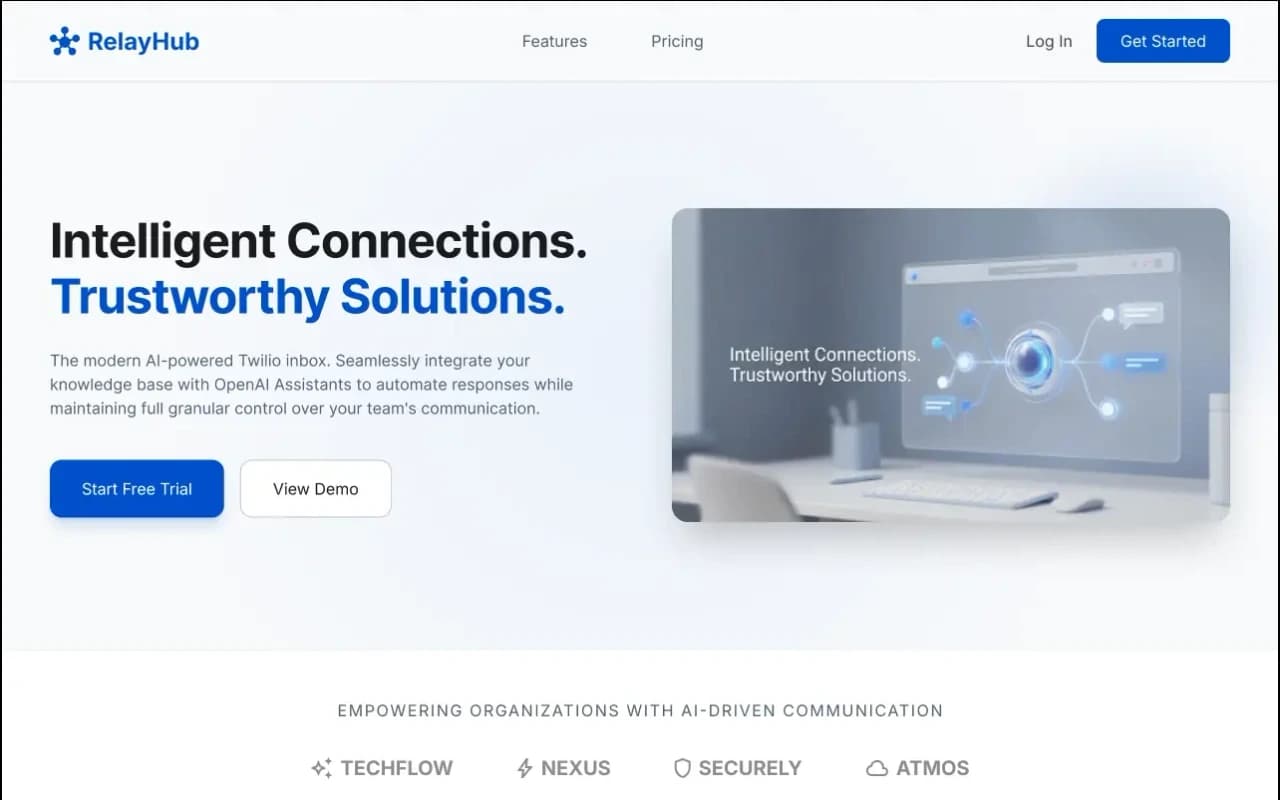
RelayHub AI communication portal case study
Twilio + OpenAI shared inbox
One triage view for Twilio phone and digital threads, with OpenAI drafts under admin prompts. Built for teams tired of rebuilding context across tools.

Loom & Luxe dress rental marketplace case study
Rentals, deposits, and return logistics
Editorial catalog with Stripe holds and automated return pickup. Lender dashboard keeps inventory and earnings honest for both sides.
Questions
More on all insights, AI development, or contact Algo Vortex.