
AI
AI agent development cost: build and run factors
AI agent budgets have two parts: the product work needed to build a dependable system and the recurring cost of models, infrastructure, evaluation, and human review. This guide explains the ranges already published here and, more importantly, what moves a project up or down.
By Umar HayatChief Technology Officer, Algo Vortex
Updated
Key takeaways
Bands, not quotes
A simple tool-calling agent and an enterprise multi-agent system are different products. Use the table as a map, then run discovery.
Budget for build and run
Delivery is one budget. Tokens, evaluations, infrastructure, and human review continue after the first production release.
Integrations dominate
Model choice matters. Wiring CRM, auth, RAG, and audit trails usually matters more.
Discovery sets the number
Ranges move with data quality, write actions, and compliance. A scoped first slice beats a guess from a blog.
What does AI agent development cost in 2026?
For a custom build with a product team, 2026 work usually falls in these bands. A simple tool-calling agent often sits around $15,000 to $40,000. RAG-backed agents run $40,000 to $90,000. Support and sales agents that write into live systems often land $50,000 to $140,000. Multi-agent and enterprise programs start near $100,000 and climb past $250,000 when security, SSO, and audit are in scope.
These are delivery ranges for a first production version, not a perpetual license and not a per-seat SaaS fee. They assume a partner that designs the agent, wires tools, ships a review UI, and leaves you with evals and a runbook. A weekend prototype with one API key is cheaper. It is also not what this page is about.
Ongoing model and infrastructure spend is separate. Light internal use might be a few hundred dollars a month. A busy support agent can run several thousand, sometimes more, before you count the humans who still approve the hard cases. Design that meter in discovery or finance will meet it as a surprise.
Typical custom-build bands in 2026, USD, first production version
Kind of agent
Simple tool-calling agent
Typical build range
$15,000 to $40,000
What you usually get
One job, a few tools, human approval, basic logging
Kind of agent
RAG-backed agent
Typical build range
$40,000 to $90,000
What you usually get
Chunking, embeddings, retrieval, citations, evals on your docs
Kind of agent
Customer support agent
Typical build range
$50,000 to $120,000
What you usually get
Inbox or ticket tools, macros, escalation, review queue
Kind of agent
Sales or outreach agent
Typical build range
$60,000 to $140,000
What you usually get
CRM writes, sequencing, guardrails on outbound copy
Kind of agent
Internal ops agent
Typical build range
$40,000 to $100,000
What you usually get
Internal APIs, role-aware tools, audit for staff use
Kind of agent
Multi-agent system
Typical build range
$100,000 to $250,000
What you usually get
Split roles, routing, shared memory, separate evals
Kind of agent
Enterprise program
Typical build range
$200,000 to $500,000+
What you usually get
SSO, VPC or private models, retention rules, on-call, multi-region
| Kind of agent | Typical build range | What you usually get |
|---|---|---|
| Simple tool-calling agent | $15,000 to $40,000 | One job, a few tools, human approval, basic logging |
| RAG-backed agent | $40,000 to $90,000 | Chunking, embeddings, retrieval, citations, evals on your docs |
| Customer support agent | $50,000 to $120,000 | Inbox or ticket tools, macros, escalation, review queue |
| Sales or outreach agent | $60,000 to $140,000 | CRM writes, sequencing, guardrails on outbound copy |
| Internal ops agent | $40,000 to $100,000 | Internal APIs, role-aware tools, audit for staff use |
| Multi-agent system | $100,000 to $250,000 | Split roles, routing, shared memory, separate evals |
| Enterprise program | $200,000 to $500,000+ | SSO, VPC or private models, retention rules, on-call, multi-region |
What factors change AI agent development cost?
Integrations, write actions, and retrieval quality often move cost more than the model name. A support agent that drafts in a sandbox is a smaller job than one that sends email and closes tickets in Zendesk or Jira. Every live connection adds authentication, failure handling, tests, and operating work.
Model and tokens still matter. A large model on every step will burn money. A small model with a bigger one on hard cases is usually the adult pattern. Tool calling, retries, and long transcripts add up. RAG adds embedding jobs, a vector store, and the time to get chunking right on messy PDFs and wikis.
MCP can reduce one-off plugin work if you already think in tools. It does not erase the cost of mapping your business systems. Security, monitoring, and oversight are the other quiet multipliers: SSO, audit logs, PII handling, eval pipelines, and a person who actually looks at traces. Skip those and the build looks cheap until the first incident.
What is the difference between build and run cost?
Build is the project: discovery, architecture, first slice, review UI, tests, and handoff. Run is the meter: tokens, embeddings, hosting, observability, and the hours humans spend approving or fixing output. Teams that only budget the build get a working agent and a finance thread three months later.
Run cost scales with volume and with how chatty the loop is. Cap steps per run. Cache retrieval. Use cheaper models for classification. Keep the expensive model for the step that needs it. If the agent retries a failing tool five times, you pay for the confusion.
Human review is a run cost people forget to count. Early on it should be high. That is how you collect eval cases. If review never drops, either the job is too hard for the current design or nobody is training the eval set. Both are cheaper to face in month one than in month six.
How can you estimate model costs before launch?
You can get within a reasonable margin with four numbers: expected runs per month, average steps per run, average tokens per step, and the price per million tokens for the model you plan to use on each step. Multiply them out and you have a monthly figure that is good enough to budget against.
The number people get wrong is steps per run. A single user question rarely means a single model call. A retrieval-backed agent typically does one call to interpret the request, one or more retrieval passes, a call per tool invocation, and a final call to compose the answer. Five to ten steps for one user-visible response is normal, so a naive estimate based on one call per question can be off by an order of magnitude.
Then apply the levers. Route classification and routing decisions to a small cheap model and reserve the expensive one for the step that actually needs reasoning. Cache retrieval results for repeated questions. Cap steps per run so a confused loop cannot bill indefinitely. Trim conversation history rather than resending a growing transcript on every turn, which is the single most common source of a bill that climbs without traffic climbing.
Set a hard spend alert on the provider account before the first real user arrives, not after. It is the cheapest insurance available and it converts a possible incident into a notification.
Rough monthly run cost by usage shape
Usage shape
Internal tool, small team
Runs per month
Under 2,000
Typical monthly meter
$50 to $400
Usage shape
Departmental ops agent
Runs per month
2,000 to 20,000
Typical monthly meter
$300 to $2,000
Usage shape
Customer-facing support agent
Runs per month
20,000 to 100,000
Typical monthly meter
$1,500 to $8,000
Usage shape
High-volume product feature
Runs per month
Over 100,000
Typical monthly meter
$5,000 and up, negotiate committed pricing
| Usage shape | Runs per month | Typical monthly meter |
|---|---|---|
| Internal tool, small team | Under 2,000 | $50 to $400 |
| Departmental ops agent | 2,000 to 20,000 | $300 to $2,000 |
| Customer-facing support agent | 20,000 to 100,000 | $1,500 to $8,000 |
| High-volume product feature | Over 100,000 | $5,000 and up, negotiate committed pricing |
How can you measure whether an AI agent pays off?
Name the success measure before the build, not after. It might be support deflection, time saved on an operations task, or response time for triage. If nobody can say what should improve, the project has no useful finish line and stakeholders will judge it by isolated impressions.
Then take a baseline. Measure the current cost of the workflow for two weeks before anything ships. Tickets handled per hour, average handling time, error rate, whatever applies. Without a baseline you cannot prove an improvement, and stakeholders will remember the old process as better than it was.
Be honest about the review cost in the payback calculation. An agent that handles seventy percent of cases but needs a human to check all of them has not saved seventy percent of the work. The saving arrives when review becomes sampling rather than inspection, and reaching that point usually takes a few months of eval work after launch.
PwC's 2026 CEO survey found only twelve percent of chief executives reported both revenue growth and cost reduction from AI investment, while fifty-six percent saw no significant financial benefit at all. Adoption is not the bottleneck. Tying the work to a named metric before writing code is what separates the two groups.
Why does a proof of concept cost less than production?
A proof of concept tests whether the job is possible on a limited set of examples. Production also needs authentication, logging, evaluations, fallbacks, and a safe failure path. Those requirements explain the price difference. Treating a PoC estimate as the full project budget is a common reason launches stall.
If you only need to know whether retrieval works on your corpus, pay for that question. If you need an agent in the product next quarter, budget for the surrounding software. How to choose an AI development company is about spotting partners who separate those two numbers on purpose.
Algo Vortex prices from a scoped slice, not from a blog table. The bands above exist so you can tell a $25,000 conversation from a $250,000 one before anyone writes a proposal.
How should you use AI agent cost ranges?
Use them to sanity-check a quote and to pick a first slice. Do not paste them into a budget as a line item and call it done. Your data, your tools, and your risk tolerance set the real number. A regulated workflow with weak APIs will sit at the top of a band. A clean internal tool with one write action will sit lower.
If you already have a product, read how to add AI to an existing product. Integration work is often the majority of the build. If you are still deciding whether you need an agent at all, start with the AI agent development pillar.
Ranges move as models and hosting change. Discovery sets the number for your case. Bring a workflow, the systems involved, and volume guesses to contact. We will map a band and a first slice, not a fake precise quote from a keyword.
Next step
Get a grounded budget for your workflow
Share the job, systems, expected volume, and allowed actions. We will map the work into a practical first slice and explain the build and run factors.
Talk to Algo VortexRelated in this cluster
- AI agent developmentAI agent development turns a defined business workflow into software that can reason, call tools, and hand risky decisions to people. This guide explains the architecture, guardrails, evaluation, and operating work needed to move past a promising demo.
- How to build an AI agentBuild an AI agent by choosing one measurable job, mapping the data and tools it needs, limiting what it can change, and requiring human approval for costly actions. A narrow first release creates better evidence than a broad platform with no clear owner.
- How to choose an AI development companyChoose an AI development company by how well it defines the job, handles your data, measures output, ships surrounding product work, and supports the system after launch. A polished demo matters far less than evidence of sound engineering and honest limits.
Related capabilities
Related case studies
Live products where this kind of work showed up in the build.
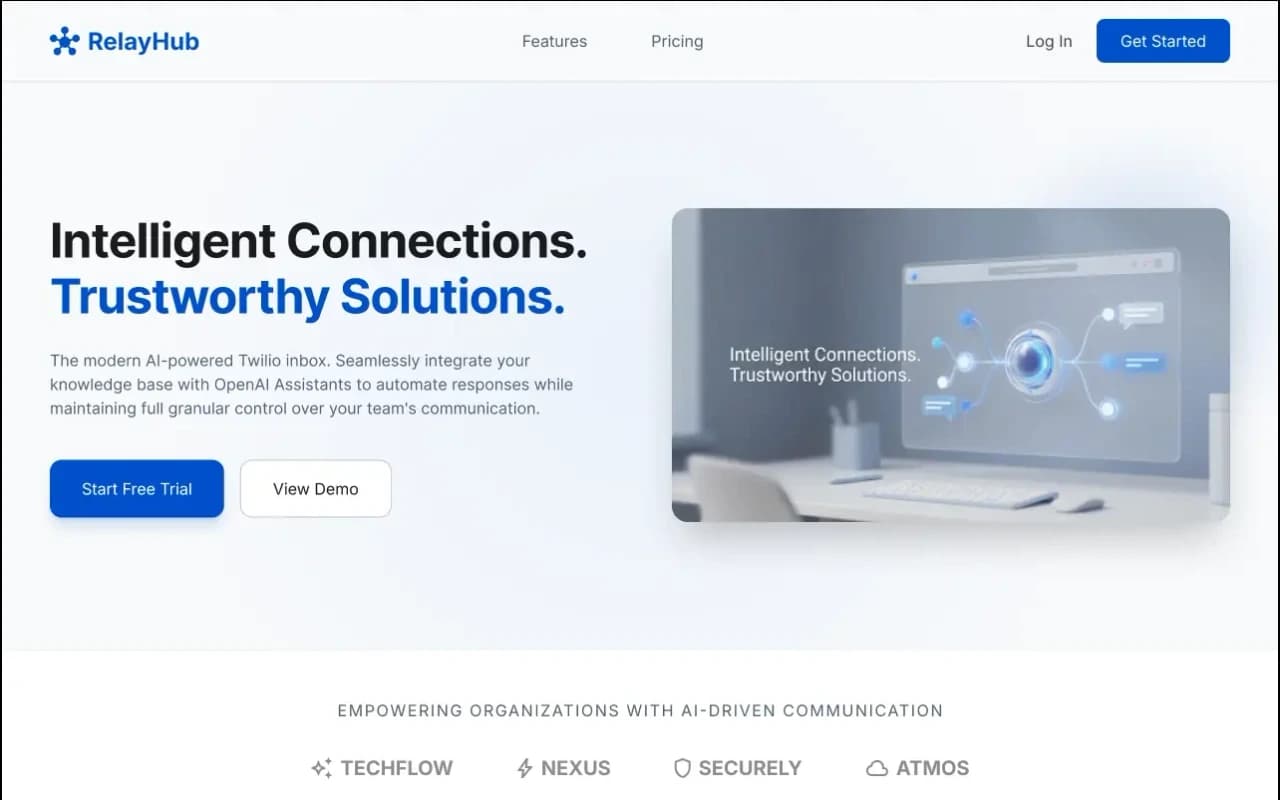
RelayHub AI communication portal case study
Twilio + OpenAI shared inbox
One triage view for Twilio phone and digital threads, with OpenAI drafts under admin prompts. Built for teams tired of rebuilding context across tools.
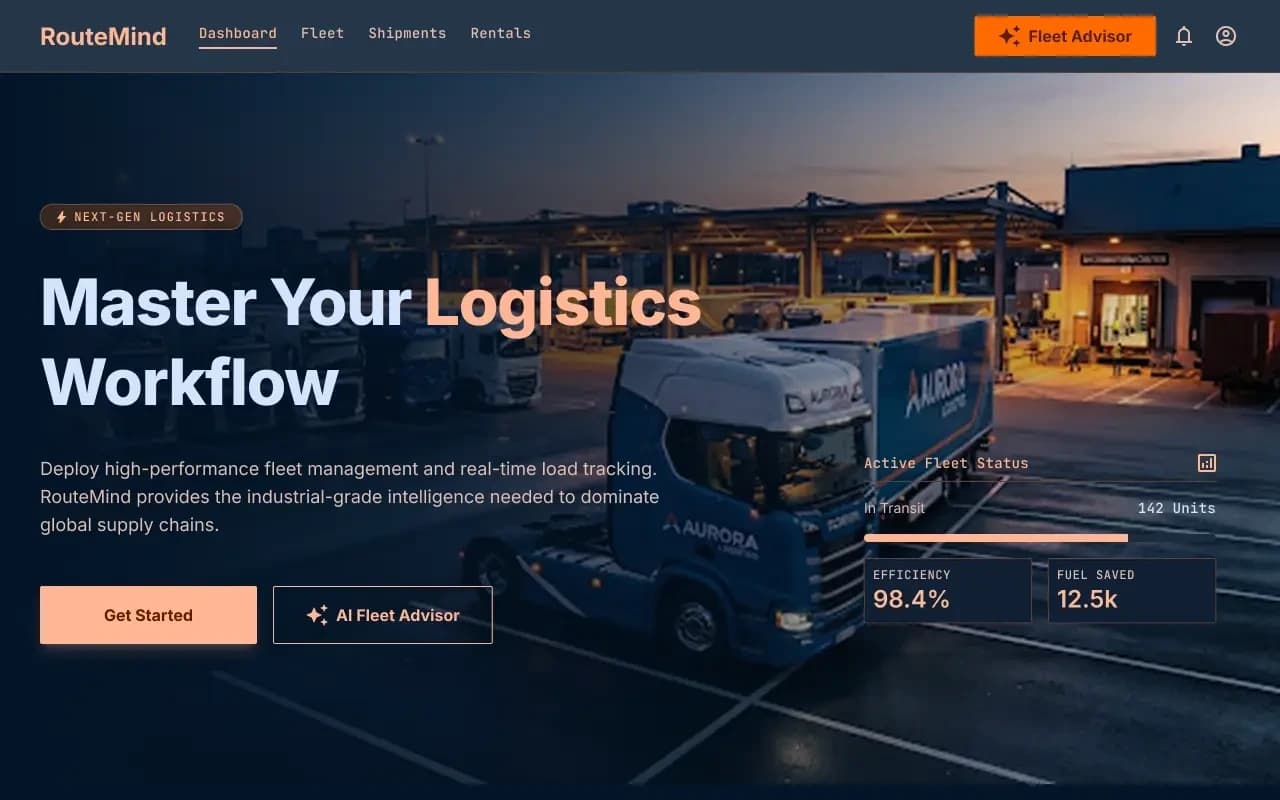
RouteMind AI fleet dispatch case study
AI Fleet Advisor + live load board
Shipper load board and fleet dashboard on one ops model, with an AI advisor that reads live capacity before suggesting the next move.
Questions
More on all insights, AI development, or contact Algo Vortex.