
QA & Security
QA and security testing services for safer releases
Find release blockers before customers do. We combine manual QA, test automation, performance checks, and security-minded reviews to protect critical flows and show your team what risk remains.
How an engagement usually runs
Step 1
Risk and coverage map
Identify critical flows, data sensitivity, and release pain points, then propose a practical test strategy.
Step 2
Baseline quality pass
Exploratory and scripted testing on current builds produces a prioritized defect list and quick wins.
Step 3
Automate what matters
CI-ready smoke and regression suites protect the paths that break most often or cost the most when they fail.
Step 4
Release gate and improve
Each release gets a clear go or no-go based on agreed criteria, with backlog items for deeper hardening.
When do releases need a real QA gate?
QA and security testing services check whether software works as expected, stays stable after changes, and avoids common security failures. Coverage can include exploratory testing, automated regression suites, API checks, performance tests, and release gates. This work fits products where defects, permissions errors, or downtime carry customer or compliance risk.
Security-minded QA is not a full penetration-test substitute for every case, but it catches common failures: open endpoints, weak session handling, exposed secrets in clients, and missing authz checks on APIs. Functional and regression coverage sits beside that so features still work after the fix. Bring us in before a major launch, during a stabilization phase, or as embedded QA on an ongoing product team.
If engineers already write unit tests but nobody owns exploratory passes, device matrices, or release criteria, that gap is exactly where this work sits. QuizQuest-style assessment flows, payment paths, and role-based admin tools are the kinds of surfaces where silent breakage hurts most. Those paths get treated as product risk, not as a checklist item to skim.
What does QA and security work include?
Test plans, manual exploratory cycles, automated UI and API suites, smoke tests in CI, and performance scenarios for critical paths. Bug reports come with steps, severity, and environment detail your engineers can act on. Retests are part of the job, not a favor. If a bug cannot be reproduced, that gets said plainly so nobody wastes a day chasing ghosts.
On the security side, checklist-driven reviews, dependency audits, basic dynamic checks, and coordination with your preferred pen-test vendor when you need a deeper assessment. Findings get prioritized by exploitability and business impact, not by who shouted loudest in Slack.
Living regression packs cover the flows that hurt most when they break: auth, checkout, permissions, imports, and the odd path only power users know. Flaky automation gets fixed or deleted. Noise is not coverage.
How do you run QA on a release train?
Learn the product, risk areas, and release cadence, then agree what "done" means for each sprint or milestone. Automation grows where it pays for itself. Findings go into your tracker with clear priority. Fixes get retested and the suite stays honest as the UI moves.
QA can embed with your developers or run as an independent gate before release. Either model stays transparent. Status is written. Blockers get named early, including environment gaps and missing acceptance criteria that would otherwise waste a week.
When a release is already late, triage is ruthless. Critical path coverage first. Nice-to-have edge cases second. A go or no-go you can defend to stakeholders, with residual risks named in plain language instead of buried in a spreadsheet nobody opens.
What tools do you use for QA and security checks?
Playwright, Cypress, Jest, pytest, k6 or similar load tools, Postman collections, and CI integration with GitHub Actions or your pipeline. Security tooling depends on your stack. What ran and what did not gets documented, so a checklist review never gets confused with a certified pen test. Test accounts and seeded data get treated as part of the suite, because brittle fixtures turn automation into theater.
Tests get written to fail for real reasons. Device and browser coverage matches how your users actually show up. Performance scenarios target the paths that matter under load, not synthetic vanity numbers. Seeded test data and stable fixtures matter as much as the assertion library you pick.
Which products need this QA work?
Fintech and healthcare need stricter evidence. E-commerce and SaaS need release speed without silent breakage. Edtech and consumer apps need device coverage that matches real classrooms and phones. Depth gets tuned to the domain without pretending every app needs the same ceremony. If regulators or enterprise buyers ask for proof, that proof gets produced without freezing the roadmap.
Related case studies: QuizQuest.
Why hire Algo Vortex for QA and security?
Engineering leads keep Algo Vortex because QA talks in product risk, not bug counts alone. You hear what would embarrass you in production, and what can wait. A single QA seat, a release-hardening project, or QA inside a dedicated team or offshore development center all work.
NDA work with US, UK, UAE, and other international clients is normal, especially when test data is sensitive. Based in Lahore, overlap hours and async reporting keep findings moving. See QuizQuest, or contact us with your release date, environments, and current automation issues.
Technologies we use
Common industries: Fintech, Healthcare, SaaS, E-commerce, Banking, Public Sector.
Related case studies
Live products where this capability showed up in the build.
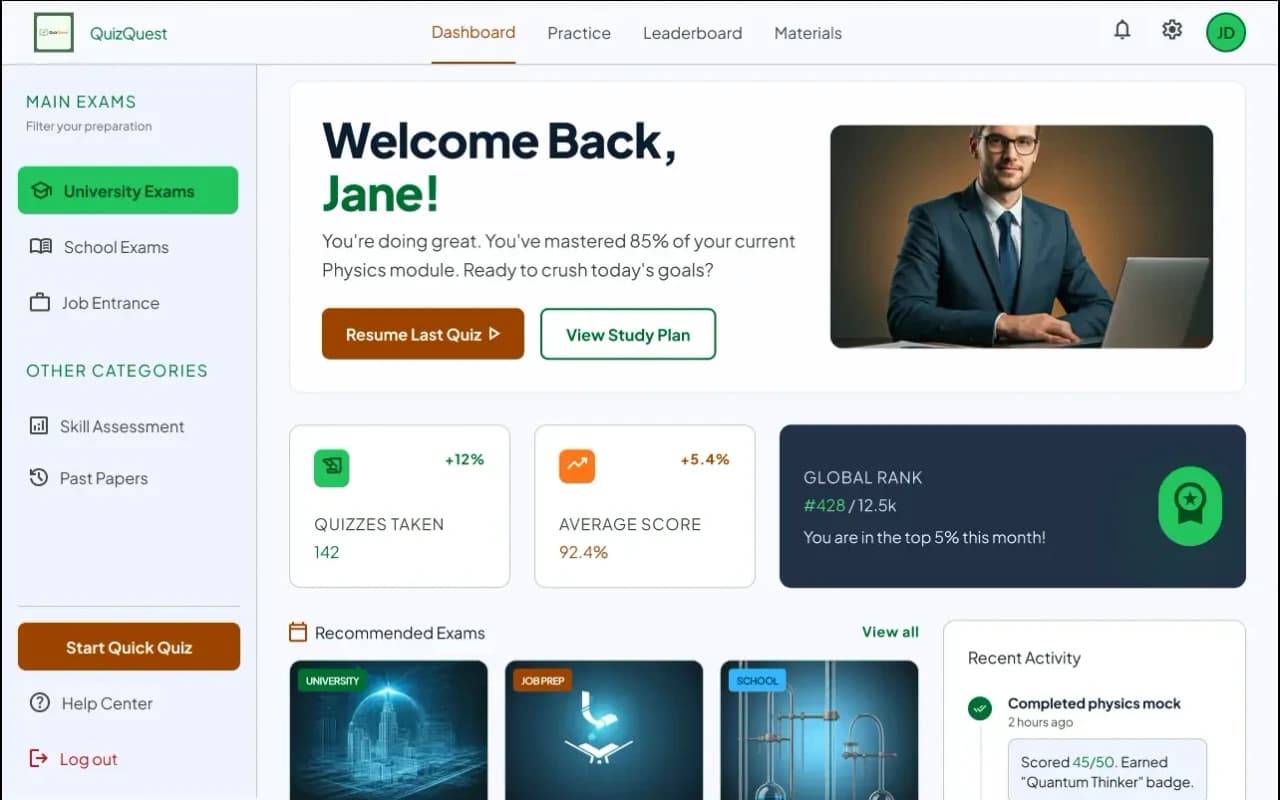
QuizQuest timed assessment platform case study
Timed quizzes + Question Creator
Timed MCQs with instant feedback, topic mastery profiles, and a Question Creator instructors can publish without waiting on engineering.
Related capabilities
- Custom Software DevelopmentFrom discovery through production releases, we build the systems your business actually runs on.
- Web & Mobile DevelopmentReact, Next.js, Flutter, or React Native apps fast enough for daily use and solid enough to grow.
- Cloud & DevOpsAWS, Azure, or GCP with CI/CD and automation so releases stay boring in the good way.
Questions about this service
More engagement and IP questions live on the FAQ page. For a lasting dedicated unit, read the Offshore Development Center guide. Ready to talk? Contact Algo Vortex.