
Staff Augmentation
Software staff augmentation with senior specialists
Add experienced engineers, designers, QA, or DevOps specialists to your existing team without opening permanent roles. They work in your tools and delivery rhythm, with a path to a larger offshore development center when needed.
How an engagement usually runs
Step 1
Define the seat
Role, seniority, stack, timezone overlap, and success criteria for the first 30 days.
Step 2
Shortlist and interview
Meet candidates quickly, with profiles that match the brief instead of a generic bench dump.
Step 3
Onboard into your system
Access, rituals, and a first meaningful ticket. Close support until the person is productive in your flow.
Step 4
Review and scale
Monthly check-ins on fit. Add seats, swap skills, or grow into a dedicated team or ODC when you are ready.
When is staff augmentation the right seat model?
Software staff augmentation adds engineers, designers, QA, or DevOps specialists to your existing team for a defined period. You keep product ownership, backlog priority, and day-to-day management. It fits when the roadmap is clear but hiring capacity, specialist skills, or short-term delivery coverage is missing.
Right model when you need a React lead next month, a QA pair for a release train, or DevOps help without opening three permanent reqs. If you later want a stable multi-role unit that feels like your own offshore team, that path leads into an offshore development center with shared management practices, continuity planning, and broader role coverage.
Poor fit when you want someone else to invent the entire product vision unsupervised. For that, choose a dedicated squad or project engagement instead. Be honest about which problem you have: missing capacity, or missing product direction. The contract should match the real problem.
What roles do you staff?
Roles placed most often: full-stack and frontend engineers, backend and API engineers, mobile developers, QA automation, DevOps, and occasional design or data help. Seniors are the default. Benches do not get padded with juniors you have to babysit. People work in your GitHub or GitLab, your Jira or Linear, your Slack.
Your branching and review rules apply. Hiring quality, payroll, and replacements if someone leaves stay on us. It should feel like a teammate joined, not that a ticket vendor opened a portal. First tickets prove setup: access, local build, and a meaningful change that lands through your pipeline.
When several related seats accumulate and you want longer planning horizons, the engagement can reshape into a dedicated team or ODC. Same people when possible. Clearer operating model. Less vendor churn. Product ownership stays with you the whole time; the commercial shape just matches how permanent the unit has become.
How do staffed engineers join your team?
Share the role profile and stack. Shortlists arrive within days, you interview, and onboarding starts with access, a buddy on your side, and a first ticket that proves setup. Delivery health stays watched: workload balance, communication, and seniority match.
Monthly check-ins catch drift early. If the work shifts toward a longer-lived pod, evolution into a dedicated team or offshore development center happens without restarting vendor search. Nobody should have to re-explain your product from zero just because the commercial wrapper changed.
Security and access follow your rules. Least-privilege roles, time-bound credentials, and a clean offboarding path are part of how seats run. If compliance review needs evidence of who touched what, that trail stays tidy.
What stacks and practices do embeds follow?
Engineers arrive fluent in common stacks: React, Next.js, Node, Python, .NET, Flutter, AWS, Postgres, and the QA tooling around them. When your stack is less common, that gets said before anyone invents confidence. Timezone overlap is agreed in writing so you know which hours are live collaboration versus async.
Practices follow yours. Written updates across time zones get coached so you are never waiting on a black box. Code review, CI, and your Definition of Done still apply. A parallel process that fights your team does not get invented. If your rituals are light, enough written context still gets insisted on so a Friday decision is findable on Monday.
Which teams use staff augmentation here?
Teams in SaaS, fintech, healthcare, commerce, logistics, and startups scaling past their first hires get augmented. Domain onboarding is part of the first sprint, not an afterthought dropped on the contractor alone. Product vocabulary, customer quirks, and release rules get written into the seat plan so the person is useful before month two.
Related case studies: RelayHub.
Why hire Algo Vortex for staff augmentation?
Hiring managers keep Algo Vortex because the first weeks feel like a teammate joined. You manage priorities. Quality and backup staffing stay honest on our side. When you outgrow one or two embeds, the same relationship can grow into an offshore development center with more roles and continuity planning. Start lean. Scale when the fit is proven.
Seats for US, UK, UAE, and other international clients run with agreed overlap hours. NDAs cover Algo Vortex and individual contributors before system access. Review RelayHub, compare our offshore development center, or contact us with the role, stack, and overlap hours you need.
Technologies we use
Common industries: SaaS, Fintech, Healthcare, E-commerce, Startups, Telecommunications.
Related case studies
Live products where this capability showed up in the build.
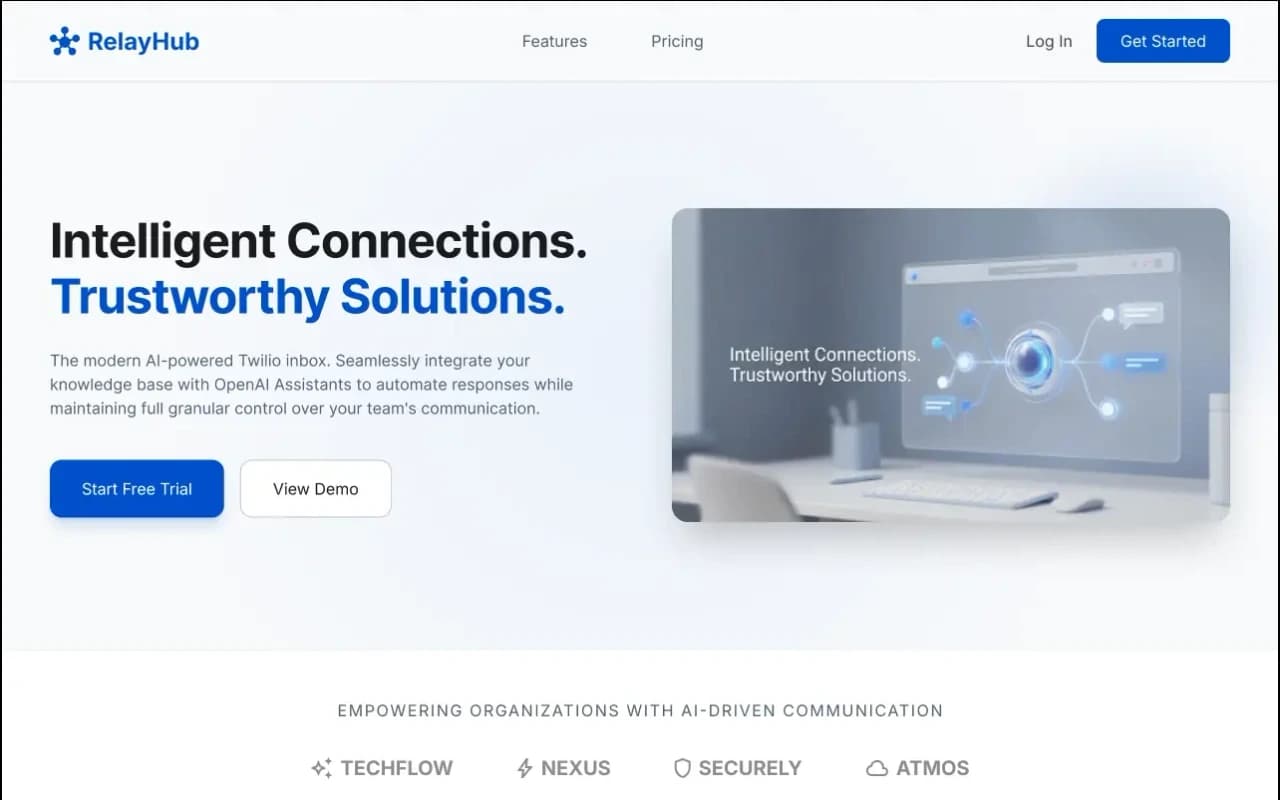
RelayHub AI communication portal case study
Twilio + OpenAI shared inbox
One triage view for Twilio phone and digital threads, with OpenAI drafts under admin prompts. Built for teams tired of rebuilding context across tools.
Related capabilities
- Custom Software DevelopmentFrom discovery through production releases, we build the systems your business actually runs on.
- QA & SecurityAutomated tests, performance checks, and security-minded QA so fewer surprises show up late.
- Cloud & DevOpsAWS, Azure, or GCP with CI/CD and automation so releases stay boring in the good way.
Questions about this service
More engagement and IP questions live on the FAQ page. For a lasting dedicated unit, read the Offshore Development Center guide. Ready to talk? Contact Algo Vortex.