
Software
How to Choose a Software Development Company
Choose a software partner by checking what still runs after launch, who owns the code, and how the team behaves when work goes wrong. Stack lists and logo walls tell you little. Production evidence, a paid trial, and clear exit terms tell you much more.
By Umar HayatChief Technology Officer, Algo Vortex
Updated
Key takeaways
Ask what is still running
A live product, visible screens, and a clear operator tell you more than a page of logos with no project details.
Separate product work from seats
A custom build has discovery and handoff. Staffing seats inside your process is a different buy.
IP and repos before kickoff
Code in your Git, assignment in the contract, NDA before sensitive systems open.
Overlap is a constraint, not a slogan
US East against Pakistan 9 to 5 does not meet. Plan the shared block. Do not pretend it is eight hours.
What should you ask a software development company?
To choose a software development company, ask for a product that is still running, inspect how the team works in a real repository, and confirm ownership before kickoff. Then test the relationship with one paid feature. You are checking delivery habits, not whether the sales team can name every popular framework.
Ask for a case that matches your shape, not your industry slogan. A B2B inbox, a rental marketplace, an assessment platform. RelayHub, Loom & Luxe, and QuizQuest are the honest CRM-adjacent proof here. There is no Salesforce replacement case study. Do not accept one invented for the pitch.
If the job is models inside a product, use how to choose an AI development company instead. This page is for custom software, SaaS, and CRM-shaped systems.
How do you tell production proof from a pitch?
Production proof has screens, a stack you can name, and an outcome that is not a vanity metric. A pitch has adjectives and a slide titled transformation. Ask who wrote the tests, who runs deploys, and what happens when the original lead leaves.
A partner who recommends against a full rewrite, or against custom when a vendor fits, is usually safer than one who never says no. Custom software vs off-the-shelf is a real fork. Partners who only sell build are selling complexity.
Cost bands live on custom software development cost. Use them to sanity-check a quote. Do not skip discovery because a blog had a number.
When is a company the wrong model?
If you already own the process, the backlog, and the architecture, you may want staff augmentation, not a product engagement. If the roadmap stays full and you want a unit that owns a slice, an offshore development center is the lasting shape.
A custom software company is the right model when you need discovery, a first slice, and a team that can carry the product through launch. Mixing those into a vague retainer with no job is how money disappears.
Fixed-scope fits a clear brief. Dedicated team fits a shifting roadmap. Pick the model in writing. Then pick the people.
If you are weighing a vendor against building the team internally, offshore vs in-house development runs the fully loaded comparison, and staff augmentation vs outsourcing separates the two models people most often conflate.
What diligence actually tells you something?
Ask for a code sample from a real project, with the client's permission, and have one of your own engineers read it. Not to judge style, but to see whether there are tests, whether the commits look like a team working or one person heroically finishing, and whether the readme would let a new person run the thing. Thirty minutes of this beats three sales calls.
Take a reference call and ask the awkward question. Not whether they were happy, but what went wrong and how it was handled. Every project of any size has a bad month. A reference who cannot name one either had a trivial project or is not being candid, and both tell you something.
Ask how they handle security basics on a normal engagement. Where secrets live, who has production access, whether laptops are encrypted, what happens to your data when an engineer rolls off. A partner who answers this fluently has been asked before by someone serious.
Then run a small paid slice before the big commitment. One real feature, two to three weeks, in your repo. It costs a fraction of the project and it surfaces everything a proposal cannot: how they estimate, how they communicate when something slips, and whether the named lead is actually the person doing the work.
What belongs in the contract?
IP assignment on payment, in plain language, covering code, designs, and anything generated during the engagement. This should not require negotiation. A partner who resists it is telling you they intend to reuse your work or keep control over it.
Your repository, your cloud accounts, your domain, from day one. Not handed over at the end. If the vendor owns the infrastructure and the relationship sours, you are negotiating for your own product. Give them access to your accounts instead of working in theirs.
A named lead written into the statement of work, with a notice period on replacement. Bait-and-switch on the technical lead is the single most common way a good pitch becomes a mediocre project. Make the substitution visible and slow.
A stated notice period and an exit clause that includes a handover: documentation, a runbook, and a walkthrough. You are buying the ability to leave. If leaving is painful by design, the pricing on everything else stops mattering.
Term
IP
What to insist on
Assigned on payment, in writing
Why it matters
Prevents ownership disputes later
Term
Repos and cloud
What to insist on
Your accounts from day one
Why it matters
You keep the product if the relationship ends
Term
Named lead
What to insist on
In the SOW with notice on change
Why it matters
Prevents a quiet downgrade of the team
Term
Exit
What to insist on
Notice period plus handover deliverables
Why it matters
Makes leaving possible, not theoretical
Term
Data
What to insist on
NDA, access scope, deletion on exit
Why it matters
Standard, and revealing if resisted
| Term | What to insist on | Why it matters |
|---|---|---|
| IP | Assigned on payment, in writing | Prevents ownership disputes later |
| Repos and cloud | Your accounts from day one | You keep the product if the relationship ends |
| Named lead | In the SOW with notice on change | Prevents a quiet downgrade of the team |
| Exit | Notice period plus handover deliverables | Makes leaving possible, not theoretical |
| Data | NDA, access scope, deletion on exit | Standard, and revealing if resisted |
Does location matter when you choose a partner?
Location matters for overlap, legal entity, and how you will talk. It does not magically make a team senior. Algo Vortex delivers from Lahore for US, UK, and Gulf clients. English-first communication and NDAs are standard. The timezone overlap planner shows the shared block before anyone pretends an eight-hour shared day exists.
Ask who you will speak to in week twelve, not only in week one. Named leads who stay through launch beat a bait-and-switch PM. Ask how they handle US holidays against Pakistan working days.
If that matches how you want to buy, send the job and the constraints to contact. If you are still shaping the problem, digital strategy consulting is the slower path to avoid a wrong build.
What are red flags in a software partner pitch?
A logo wall with no screens. A promise to staff the team after you sign, with no named lead. A rewrite of everything in six weeks. A refusal to put code in your Git. A claim they replaced Salesforce when they cannot show the org. Those are enough to walk.
Another flag is a quote with no integrations listed. UI is visible. Payments, identity, and vendor APIs eat the budget. If the proposal does not name them, the number is entertainment. Cost bands exist so you can sanity-check, not so you can skip that list.
Ask who you will still be talking to after the first demo. Bait-and-switch PMs are common. Write the named lead into the statement of work. If they cannot do that, they do not have the team yet.
One more: a partner who agrees to every scope item without pushing back on any of them. Agreement is pleasant and it is not diligence. Somebody who has built this shape before will have opinions about what should be cut from the first release, and hearing those opinions early is most of the value you are buying.
How do you make the final call between two good options?
Once both shortlisted partners clear the diligence bar, stop comparing capability and start comparing fit on the things that will actually shape your year. Who did you understand more easily on the calls. Whose questions during discovery told you something you had not thought about. Whose written proposal read like it was about your problem rather than assembled from a template.
Weigh overlap hours honestly rather than optimistically. A partner three hours away that you can talk to daily often outperforms a better-credentialed one twelve hours away, because the cost of a slow feedback loop compounds across every decision. The timezone overlap planner gives you the real number rather than the one on the pitch deck.
Then pick and commit. Running a third evaluation round rarely produces new information, and the delay costs more than the marginal difference between two partners who both passed the same checks. If the small paid slice went well, that is your answer.
Next step
Shortlisting software partners?
Send the job, constraints, and what you need to own at handover. We will say whether we fit and propose a paid first slice you can evaluate.
Talk to Algo VortexRelated in this cluster
- Custom software developmentCustom software earns its keep when your workflow does not fit a vendor tool, or when that workflow is the product customers buy. Here is how to decide, what a serious engagement includes, and how to ship something your team can still run after launch.
- Custom software development costCustom software cost follows scope, integrations, data, and the team needed to keep it running. A useful estimate separates the first production release from hosting, maintenance, and later changes. This guide explains the cost drivers already hiding inside most briefs.
- Custom software vs off-the-shelfBuy software when a vendor already handles the job well. Build when the workflow itself sets your business apart or the workaround cost keeps climbing. Many teams need both: a proven product for standard work and a custom layer for the part that is uniquely theirs.
- How to build custom softwareStart custom software with one job, known users, and a result you can demonstrate. Model the records behind that job, ship a vertical slice through a real integration, and put it in staging early. Broad platform plans can wait until the first workflow works.
Related capabilities
Related case studies
Live products where this kind of work showed up in the build.
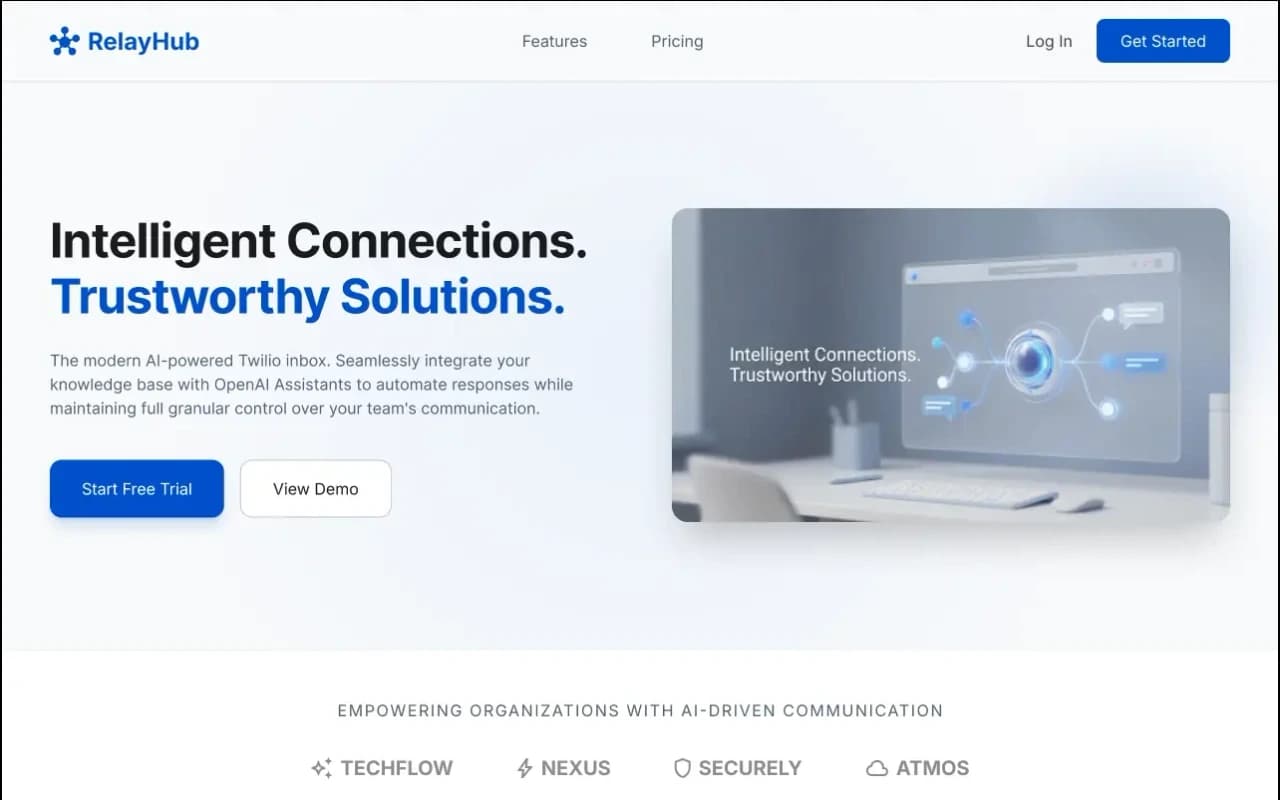
RelayHub AI communication portal case study
Twilio + OpenAI shared inbox
One triage view for Twilio phone and digital threads, with OpenAI drafts under admin prompts. Built for teams tired of rebuilding context across tools.

Loom & Luxe dress rental marketplace case study
Rentals, deposits, and return logistics
Editorial catalog with Stripe holds and automated return pickup. Lender dashboard keeps inventory and earnings honest for both sides.
Questions
More on all insights, custom software, or contact Algo Vortex.