Software
Custom Software vs Off-the-Shelf: Which Should You Choose?
Buy software when a vendor already handles the job well. Build when the workflow itself sets your business apart or the workaround cost keeps climbing. Many teams need both: a proven product for standard work and a custom layer for the part that is uniquely theirs.
By Umar HayatChief Technology Officer, Algo Vortex
Updated
Key takeaways
Buy standard work
Payroll, email, and ordinary accounting rarely set a business apart. Existing products usually cover them better than a custom build.
Build the edge that makes money
If the vendor's data model fights how you sell or operate, you will pay that tax forever.
Hybrid is the usual answer
Vendor for the commodity. Custom for the workflow. Glue with APIs, not with spreadsheets.
Cost is more than the license
Seats, workarounds, and consultants on the vendor side. Build plus run on the custom side. Compare both bills.
When should you buy software instead of building it?
Choose off-the-shelf software when a vendor covers the workflow well and the remaining gaps are cheaper to accept than to build. Choose custom software when the workflow is your product or creates a lasting advantage. A hybrid works when standard software handles the commodity work and custom code handles the valuable edge.
Build when the leftover pain is the job. A marketplace with two-sided payments, a multi-tenant product that is the company, an ops platform that encodes how you actually fulfill. Custom software exists for that tax, not for a brochure site.
Hybrid is the usual adult answer. Keep the vendor for the generic slice. Build the workflow that makes you money. Connect them with APIs and a clear system of record. Do not run the business in a spreadsheet that both systems dump into.
Buy, build, or hybrid, by what you are actually paying for
Lens
Fits when
Off-the-shelf
Vendor models your work
Custom
Workflow is the product
Hybrid
Generic plus a sharp edge
Lens
You pay
Off-the-shelf
Seats, add-ons, consultants
Custom
Build, then run
Hybrid
Both, on purpose
Lens
Data model
Off-the-shelf
Theirs
Custom
Yours
Hybrid
Yours at the edge, theirs at the core
Lens
Change speed
Off-the-shelf
Roadmap you do not control
Custom
Your backlog
Hybrid
Vendor lag plus your slice
Lens
Risk
Off-the-shelf
Lock-in and workarounds
Custom
Scope and ops
Hybrid
Integration and two owners
Lens
Typical fit
Off-the-shelf
Accounting, email, simple CRM
Custom
SaaS, marketplace, ops platform
Hybrid
CRM plus custom portal
| Lens | Off-the-shelf | Custom | Hybrid |
|---|---|---|---|
| Fits when | Vendor models your work | Workflow is the product | Generic plus a sharp edge |
| You pay | Seats, add-ons, consultants | Build, then run | Both, on purpose |
| Data model | Theirs | Yours | Yours at the edge, theirs at the core |
| Change speed | Roadmap you do not control | Your backlog | Vendor lag plus your slice |
| Risk | Lock-in and workarounds | Scope and ops | Integration and two owners |
| Typical fit | Accounting, email, simple CRM | SaaS, marketplace, ops platform | CRM plus custom portal |
How does this apply to CRM and SaaS?
A CRM seat is off-the-shelf until your pipeline, pricing, or fulfillment no longer fits the objects. Then you either pay consultants to bend it, or you build a CRM-shaped system. Custom CRM vs Salesforce is that fork. We do not invent Salesforce list prices here. Seats and fit decide, not a fake quote.
If the product you sell is software, you are already on the custom side. SaaS development covers tenancy, billing, and entitlements. Buying a generic builder and hoping it becomes your product is how teams stall.
Honest CRM-adjacent work we have shipped: RelayHub for inbox and accounts, Loom & Luxe for customers and payments, QuizQuest for roles and assessments. None of those is a Salesforce rip-and-replace.
How do you compare cost without a fake quote?
On the vendor side, add seats, required add-ons, implementation consultants, and the hours your staff spend on workarounds. On the custom side, add the build and the run. Dollar bands for the build live only on custom software development cost. This page stays on the decision.
A cheap license with a full-time admin who fights the tool is not cheap. A custom system with nobody to operate it is not cheaper either. Someone has to own the result in both cases.
If the next question is who should build the custom slice, how to choose a software development company is the filter.
How do you measure the workaround tax?
The workaround tax is the recurring human cost of a tool that nearly fits. It is real money and almost nobody puts it on the comparison. Measuring it takes about a week and it usually settles the argument.
Watch for four patterns. Recurring exports, where someone pulls data out on a schedule to do the actual work in a spreadsheet. Shadow systems, where a team keeps a second source of truth because the official one cannot hold what they need. Manual reconciliation between two records that should have been one. And tribal formulas, where a critical calculation lives in a custom field that exactly one person understands.
Count the hours each of those costs per week, attach the salary of the person doing it, and multiply by fifty. Then add the consultant days you spend each year bending the tool, and the licence cost of seats bought only so someone can access a workaround. That total is what you are comparing against a build, not the subscription line.
The useful part of this exercise is that it sometimes argues for staying. If the tax comes to a few thousand a year, no build is worth it and you should fix the process instead. When it comes to a headcount or more, the conversation changes.
Which decision is easier to reverse?
Buy is easier to reverse early and much harder later. In year one you can leave a vendor with a clean export. By year four you have automations nobody documented, integrations pointing at their API, and staff whose workflow is the tool. The exit cost grows quietly the whole time, which is why lock-in is a schedule problem rather than a contract problem.
Build is expensive up front and stays reversible, because you own the schema and the data. The risk moves elsewhere: you now need someone to operate it, and a custom system with no owner degrades faster than a vendor product with no owner.
The practical rule is to keep your data portable regardless of which way you go. Own a clean export path, avoid encoding critical business logic exclusively inside vendor automations, and keep one clear system of record per entity. That preserves the option to change your mind, which on a five-year horizon is worth more than getting the initial call exactly right.
How should a team decide in the next month?
List the workflows that make money. Mark which a vendor already covers. Mark which require objects the vendor does not have. If the second list is short, buy and integrate. If it is the product, build. If it is both, hybrid.
Do not decide from a slogan about digital transformation. Decide from a week of watching how work actually moves. Then a short discovery. Algo Vortex will say if a vendor, a custom slice, or a rewrite fits. Send the current system on contact.
The commercial path for a build is custom software. Strategy without a build yet is consulting.
Next step
Not sure whether to buy or build?
Share the workflow, current products, and recurring workarounds. We will tell you whether to stay, add a custom layer, or replace one part.
Talk to Algo VortexRelated in this cluster
- Custom software developmentCustom software earns its keep when your workflow does not fit a vendor tool, or when that workflow is the product customers buy. Here is how to decide, what a serious engagement includes, and how to ship something your team can still run after launch.
- Custom software development costCustom software cost follows scope, integrations, data, and the team needed to keep it running. A useful estimate separates the first production release from hosting, maintenance, and later changes. This guide explains the cost drivers already hiding inside most briefs.
- Custom CRM vs SalesforceSalesforce is a strong choice when its objects, ecosystem, and hiring market fit your sales operation. A custom CRM becomes worth considering when the business runs on records or permissions the platform cannot model cleanly. Compare the whole operating burden, not a license line alone.
- SaaS developmentSaaS development includes the product people pay for and the rails that keep each customer separate: tenancy, billing, permissions, support tools, and controlled releases. A credible MVP pairs those basics with one workflow that solves a painful job. Everything else can wait.
Related capabilities
Related case studies
Live products where this kind of work showed up in the build.
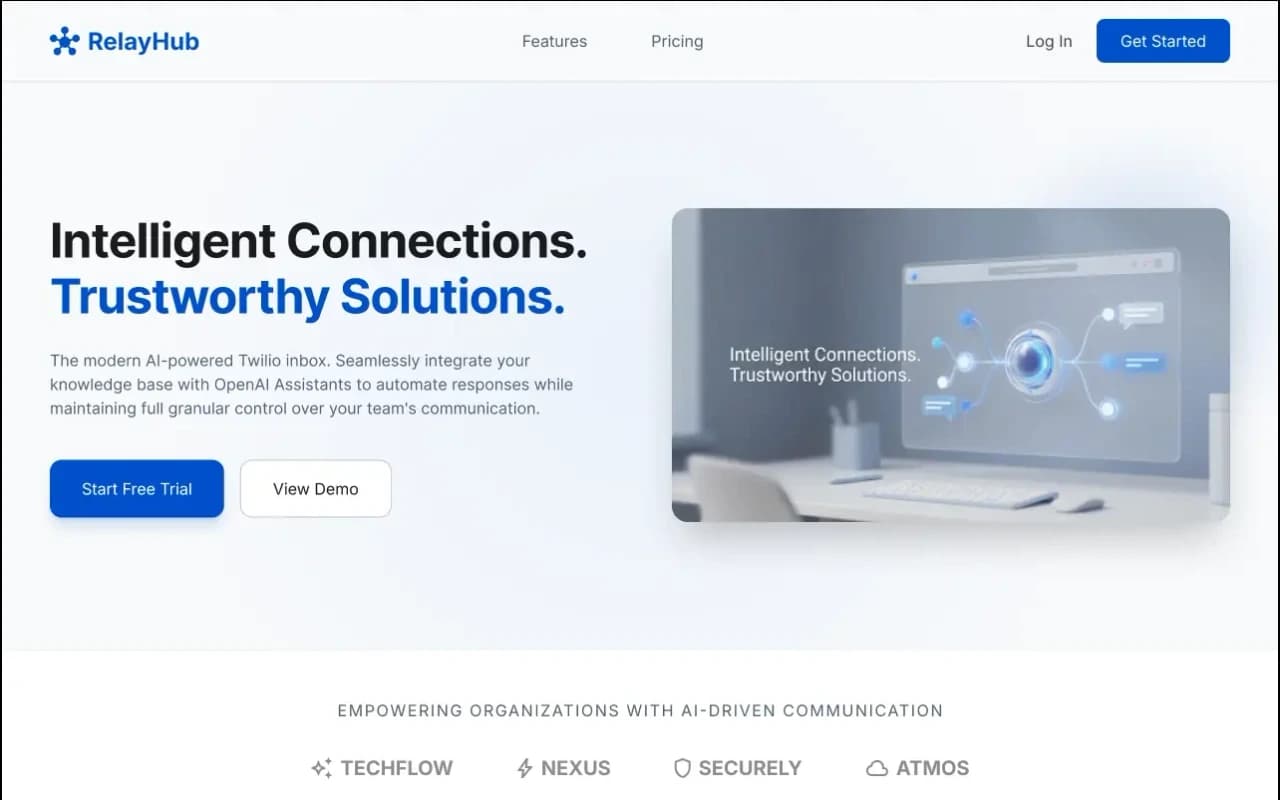
RelayHub AI communication portal case study
Twilio + OpenAI shared inbox
One triage view for Twilio phone and digital threads, with OpenAI drafts under admin prompts. Built for teams tired of rebuilding context across tools.

Loom & Luxe dress rental marketplace case study
Rentals, deposits, and return logistics
Editorial catalog with Stripe holds and automated return pickup. Lender dashboard keeps inventory and earnings honest for both sides.
Questions
More on all insights, custom software, or contact Algo Vortex.