
Software
Logistics Software Development for Real-World Operations
Logistics software has to survive bad addresses, missing signal, late arrivals, damaged goods, and routes that change after dispatch. The happy path is easy. Useful systems model exceptions, work in a driver's actual conditions, and keep order, carrier, and customer data in sync.
By Umar HayatChief Technology Officer, Algo Vortex
Updated
Key takeaways
Model exceptions as normal work
Failed delivery, damage, rerouting, and partial loads need defined states and recovery paths. They are daily operations, not edge cases.
Exceptions are the product
The happy path is a week of work. Failed deliveries, reroutes, damage, and partial loads are where the system earns its money.
Drivers use it in a truck
One hand, gloves on, bad signal, bright sun. If the app needs two taps and full attention, it will not get used.
Offline is a requirement, not a feature
Coverage drops in warehouses, basements, and rural routes. Queue writes locally and reconcile, or lose data daily.
What kinds of logistics software get built?
Logistics software development covers transportation management systems, fleet tools, load boards, and last-mile driver apps. The hard work is connecting orders to physical events while handling poor address data, weak signal, carrier differences, and failed deliveries. A useful first release runs one real lane end to end, including one exception path.
Fleet management is the asset side: where the vehicles are, what condition they are in, when they need service, and how they are being driven. It leans on telematics hardware and generates a lot of data that is only useful if somebody has decided in advance which decisions it should drive.
Load boards match available freight to available capacity. The engineering challenge is not the matching, it is trust and speed. Both sides need to believe the listings are real, and the interface has to work for a dispatcher clearing thirty loads before lunch.
Last mile delivery covers the driver app, proof of delivery, customer notifications, and the reschedule flows. It is the most consumer-visible part and the most exception-heavy. RouteMind is our work in this space, covering a fleet dashboard, a shipper load board, and an AI advisor over route data.
Why are addresses the hardest part?
Because an address in a database is a string, and a delivery point is a physical place with a gate, a loading dock, an access code, opening hours, and possibly a security guard who needs a name on a list. The gap between those two things is where most delivery failures originate, and no routing algorithm improves it.
Normalise and geocode at intake rather than at dispatch. Validate against a real address service when the order is created, so the person who can still fix it is the one looking at it. Correcting an address at 6am when a driver is already loaded is far more expensive than catching it the day before.
Store the delivery instructions as structured data rather than a free-text note, because free-text notes do not survive being read on a phone in a truck. Gate code, dock number, contact name, access window: separate fields, each visible at the right moment in the driver flow.
And keep a correction loop. Drivers learn things about locations that the database does not know. If there is no fast way for a driver to record that the entrance is actually around the back, that knowledge stays in one person's head and leaves when they do.
Why do exceptions define the system?
The happy path in logistics software is straightforward: order arrives, load is planned, driver delivers, status updates. A competent team builds that in a couple of weeks. Everything after it is the actual project.
Consider what has to be handled. The customer is not home. The address is wrong. The goods are damaged on arrival. Only part of the load fits. The vehicle breaks down mid-route. The receiving warehouse closes early. The driver's shift runs out of legal hours. A delivery is refused. Each of these needs a defined path, a status, a notification, and a financial consequence, because somebody eventually has to be billed or credited.
The failure pattern to avoid is treating exceptions as errors. If the system only models success, every exception becomes a phone call and a spreadsheet, and the software stops being the system of record within a month. Model the exceptions as first-class states from the first release, even if the handling is manual at the start.
This is also where the honest scoping conversation lives. A brief that describes only the happy path is not a small project, it is an unscoped one.
Exception
Failed delivery
Needs
Reason codes, reschedule flow, notification
Financial consequence
Redelivery fee or credit
Exception
Partial delivery
Needs
Line-level quantities, discrepancy record
Financial consequence
Partial invoice
Exception
Damage
Needs
Photo capture, claim reference
Financial consequence
Claim against carrier or insurer
Exception
Wrong address
Needs
Correction flow, reroute, driver feedback
Financial consequence
Extra mileage
Exception
Vehicle breakdown
Needs
Load reassignment, ETA recalculation
Financial consequence
Cost of recovery and delay
Exception
Hours of service limit
Needs
Driver hours tracking, handover
Financial consequence
Compliance risk, not just cost
| Exception | Needs | Financial consequence |
|---|---|---|
| Failed delivery | Reason codes, reschedule flow, notification | Redelivery fee or credit |
| Partial delivery | Line-level quantities, discrepancy record | Partial invoice |
| Damage | Photo capture, claim reference | Claim against carrier or insurer |
| Wrong address | Correction flow, reroute, driver feedback | Extra mileage |
| Vehicle breakdown | Load reassignment, ETA recalculation | Cost of recovery and delay |
| Hours of service limit | Driver hours tracking, handover | Compliance risk, not just cost |
What makes a driver app actually get used?
Design it for the real conditions. One hand, because the other one is holding a parcel. Gloves in winter, so touch targets have to be large. Bright sunlight, so contrast matters more than a subtle palette. A phone mounted at arm's length, so text has to be readable at a glance rather than on inspection.
Cut the taps. Every extra tap in a flow that repeats forty times a day is a real cost and a real source of resistance. The most common flow, arriving and confirming a delivery, should be the shortest path in the entire application.
Assume the connection will fail. Warehouses, loading bays, basements, and rural routes all drop coverage. Every write has to queue locally and sync when the signal returns, and the sync has to be idempotent so a retry cannot create a duplicate. This is a significant piece of engineering and it is not optional, because a driver app that loses a proof of delivery gets abandoned immediately.
Respect the battery. Continuous GPS tracking at high frequency will flatten a phone before the shift ends, and a dead phone means no tracking at all. Sample adaptively: frequently when moving, rarely when stationary.
Which integrations decide the timeline?
Carrier APIs, and they vary wildly in quality. Some are modern and documented. Others are SOAP endpoints with a PDF specification from 2014, and a few still expect a flat file on an SFTP server. Each one is its own small project and the estimate should reflect that rather than treating carriers as a single line item.
Telematics and ELD providers for fleet work. The data is usually available but the models differ between vendors, so building an internal normalised representation early saves you from a schema that mirrors whichever provider you integrated first.
Mapping and routing services, where the thing to watch is cost. Route optimisation calls and high-frequency geocoding get expensive at volume, and the pricing model rewards caching aggressively. Decide early whether you are optimising routes on every change or on a schedule, because that choice moves the bill by an order of magnitude.
And the systems around it: ERP or order management upstream, accounting for invoicing, and customer notification channels. API integration services covers the general shape of this work.
How should a logistics build be phased?
Start with one lane and one flow, end to end, in production. One customer, one route type, one exception path. Real drivers, real deliveries, real data. A narrow slice that actually runs teaches you more in three weeks than three months of planning against a spreadsheet.
Add exceptions next, before adding scope. Every exception you handle properly removes a phone call and a manual workaround, and that is where the return on the software actually comes from. Teams that add more lanes before handling exceptions end up with a wider system that everyone routes around.
Then optimisation. Route planning, load consolidation, and predictive work are genuinely valuable and they need clean historical data to be worth anything. Building them before the data is trustworthy produces confident recommendations based on nothing.
How to build custom software covers the vertical slice approach in general, and the commercial path is custom software development.
Next step
Where does your logistics flow break today?
Send the lanes, carrier systems, driver workflow, and common exceptions. We will map one production slice that handles real deliveries from the start.
Talk to Algo VortexRelated in this cluster
- Custom software developmentCustom software earns its keep when your workflow does not fit a vendor tool, or when that workflow is the product customers buy. Here is how to decide, what a serious engagement includes, and how to ship something your team can still run after launch.
- How to build custom softwareStart custom software with one job, known users, and a result you can demonstrate. Model the records behind that job, ship a vertical slice through a real integration, and put it in staging early. Broad platform plans can wait until the first workflow works.
- API integration servicesAPI integration work starts after the first successful request. Production systems need token renewal, rate-limit handling, safe retries, webhook verification, reconciliation, and logs that explain what happened. Scope those failure paths early or the estimate will miss most of the job.
- Custom software development costCustom software cost follows scope, integrations, data, and the team needed to keep it running. A useful estimate separates the first production release from hosting, maintenance, and later changes. This guide explains the cost drivers already hiding inside most briefs.
Related capabilities
Related case studies
Live products where this kind of work showed up in the build.
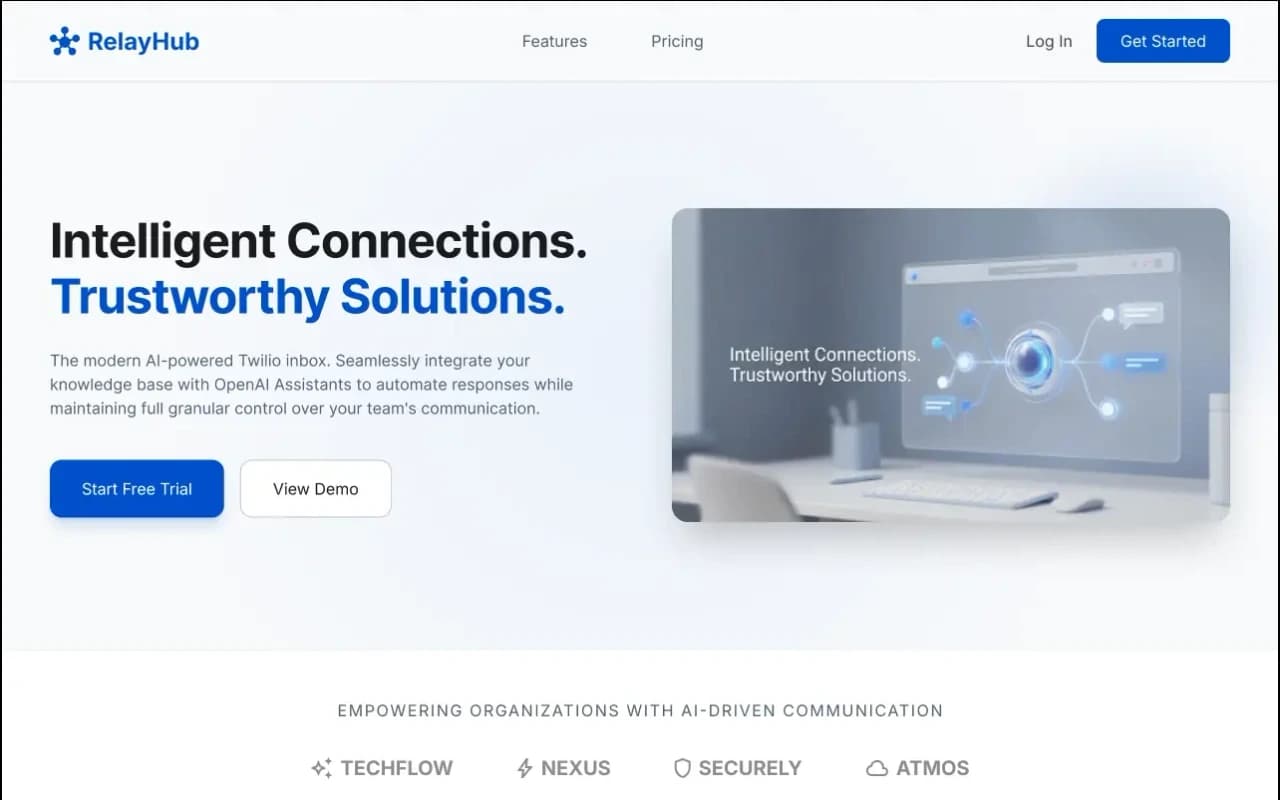
RelayHub AI communication portal case study
Twilio + OpenAI shared inbox
One triage view for Twilio phone and digital threads, with OpenAI drafts under admin prompts. Built for teams tired of rebuilding context across tools.
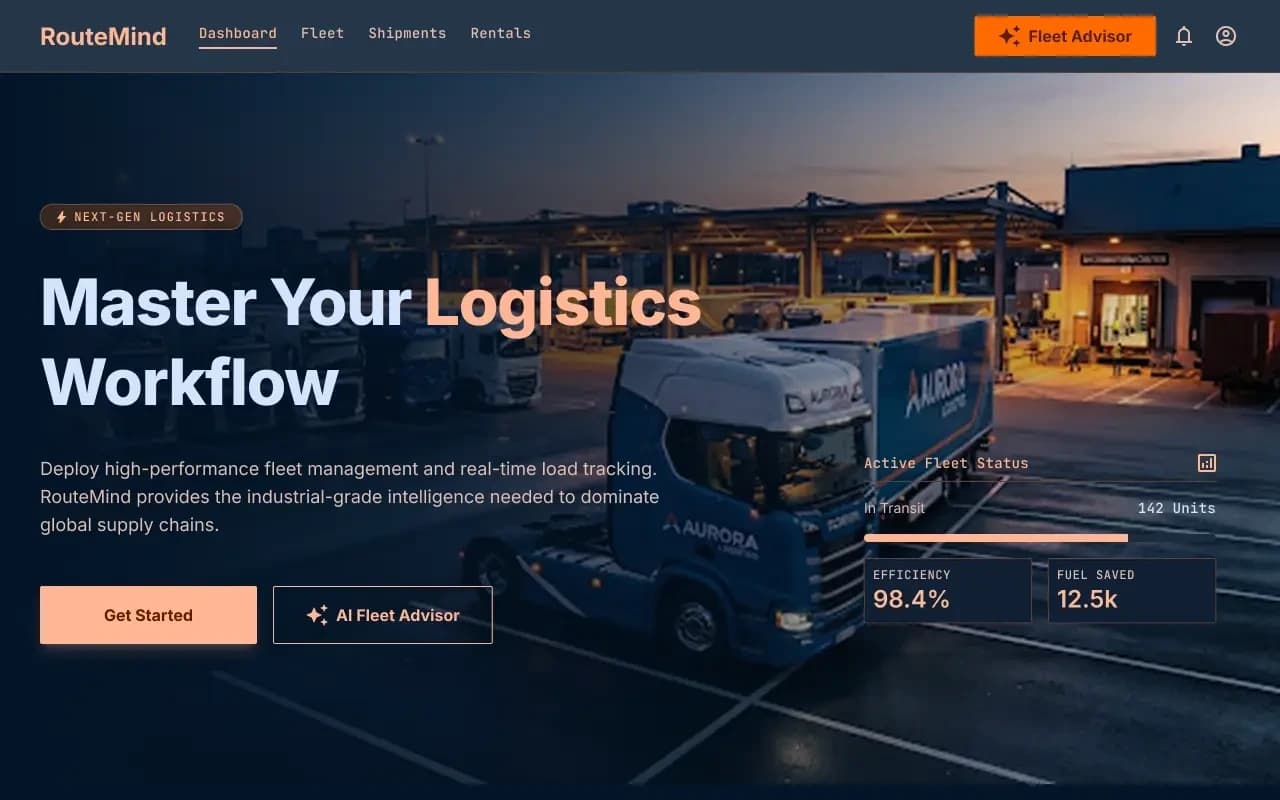
RouteMind AI fleet dispatch case study
AI Fleet Advisor + live load board
Shipper load board and fleet dashboard on one ops model, with an AI advisor that reads live capacity before suggesting the next move.
Questions
More on all insights, custom software, or contact Algo Vortex.